How to Automate Expense Tracking for UK SMEs: Reduce Admin and Boost Reimbursements
Tired of chasing receipts and wrestling with spreadsheets that slow down your UK SME’s growth? Automated expense tracking for UK SMEs can reclaim hours of admin time weekly.
Why UK SMEs Need Automated Expense Tracking
Automated expense tracking for UK SMEs is transforming how small and medium businesses handle finances, cutting manual admin by up to 80% and ensuring faster, accurate reimbursements.
Manual processes lead to errors, delays, and compliance headaches that drain time and resources from busy teams.
In this guide, discover practical steps to automate your expense tracking while staying GDPR compliant and tailored to UK business needs.
The Challenges of Manual Expense Tracking for UK SMEs
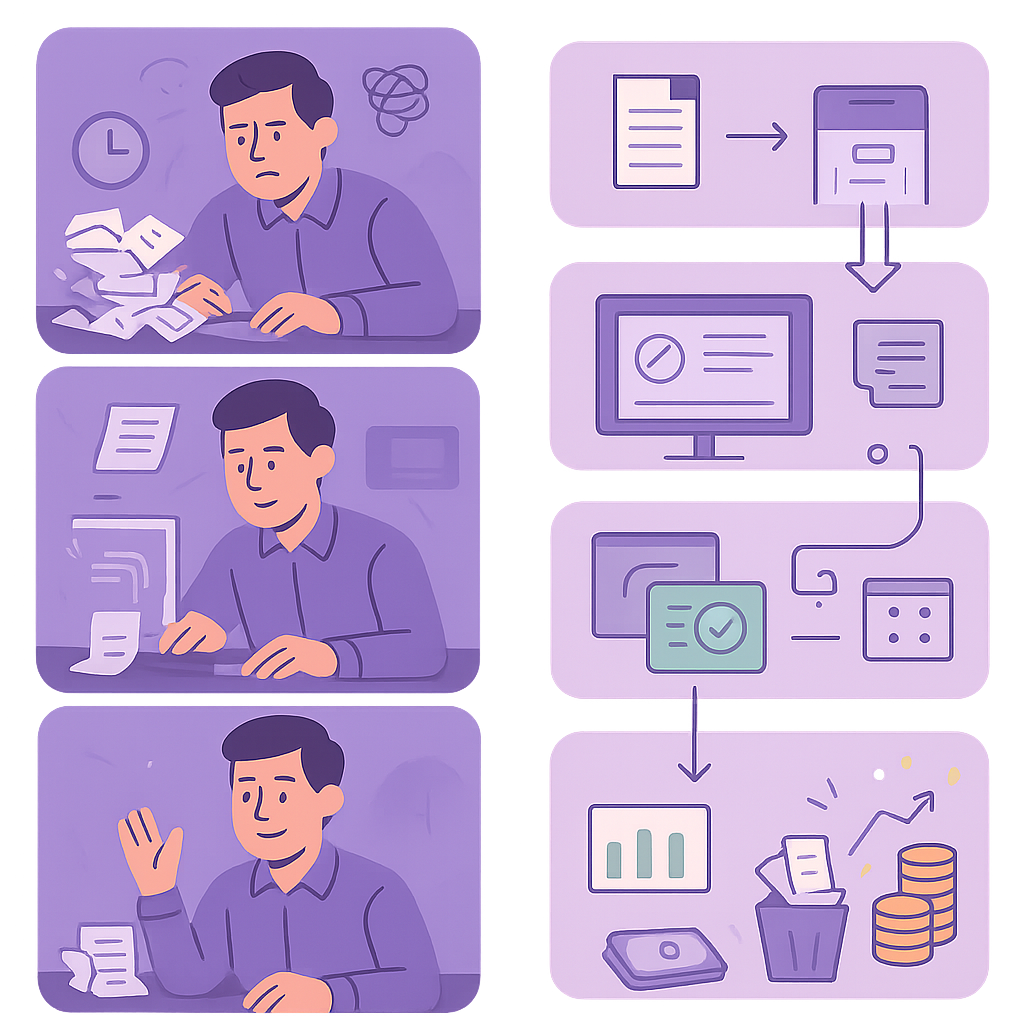
Manual expense tracking remains a persistent headache for many UK SMEs, where finance teams spend countless hours sifting through crumpled receipts, mismatched invoices, and endless spreadsheets. This time-consuming process not only slows down reimbursements but also frustrates employees who are left waiting for their money.
Common issues include error-prone data entry, where simple typos lead to incorrect categorisation of expenses, potentially resulting in overpayments or under-claims. Delayed approvals further exacerbate cash flow problems, as employees hesitate to spend on business needs without prompt reimbursement.
- Time lost on receipt collection and matching – often 5-10 hours per employee per month.
- Error-prone manual entry leading to inaccurate financial records.
- Delayed reimbursements causing employee dissatisfaction and reduced spending on essentials.
- Lack of visibility into spending patterns, hindering budgeting and forecasting.
Why Manual Expense Processes Fail as Your SME Grows
As UK SMEs expand, the volume of expenses surges with more employees, travel, and suppliers. Manual processes, designed for smaller teams, quickly become overwhelmed, leading to overlooked claims and inconsistent handling.
Remote and hybrid working adds complexity, with digital receipts scattered across emails and apps, making centralisation difficult without integrated systems. Additionally, lack of connection to accounting software like Xero means duplicate data entry, amplifying errors and inefficiencies.
- Increasing transaction volumes outpace manual capacity.
- Remote work scatters receipts, complicating collection.
- No integration with accounting tools causes data silos.
- Scaling teams introduce varying expense policies that manual checks struggle to enforce.
The Hidden Risks of Poor Expense Management
Poor expense management exposes UK SMEs to significant financial risks, such as fraudulent claims slipping through unchecked or legitimate expenses being missed, directly impacting profitability.
Legally, non-compliance with HMRC rules on allowable expenses or GDPR for handling personal data in receipts can lead to fines and audits. Operationally, persistent delays erode employee trust and morale, while inaccurate records complicate tax filings.
Data security is another concern; physical receipts pose loss risks, and emailed spreadsheets are vulnerable to breaches without proper controls.
- Reimbursement errors leading to cash flow leaks or disputes.
- GDPR violations from insecure storage of employee data.
- HMRC audit failures due to poor documentation.
- Fraud risks from unverified claims amplifying losses.

Verify all automated data entries to prevent reimbursement errors. Ensure GDPR compliance by securing employee data and obtaining consents. Test integrations thoroughly and monitor UK tax regulation updates.
Automated Expense Tracking for UK SMEs: Key Features and Benefits
Automated expense tracking for UK SMEs leverages technologies like OCR for instant receipt scanning, turning photos into structured data with categories, amounts, and dates automatically populated.
Real-time approvals via mobile apps speed up workflows, while integrations with Xero, QuickBooks, or Sage ensure seamless syncing to your accounts. This not only cuts admin time but also provides dashboards for spending insights, aiding better financial control.
Benefits include up to 80% reduction in processing time, near-elimination of errors, and faster reimbursements, keeping employees happy and productive.
- OCR-powered receipt scanning and auto-categorisation.
- Mobile submissions with GPS verification for location.
- Policy enforcement rules to flag non-compliant claims.
- Real-time reporting and analytics for VAT reclaim optimisation.
- Seamless integrations with UK accounting software.

Look for tools offering OCR, mobile apps, integrations with Xero/QuickBooks, and GDPR-compliant data handling tailored for UK SMEs.
Choosing the Right Expense Automation Tools for UK SMEs
Selecting the right tool starts with assessing your SME’s size, expense volume, and existing software stack. Prioritise platforms with strong UK market presence, supporting VAT handling and HMRC-compliant reporting.
Ease of use is crucial for non-finance staff, alongside scalable pricing that doesn’t penalise growth. GDPR certification and data hosted in the UK or EU are non-negotiable for compliance.
- GDPR compliance and UK/EU data centres.
- Integrations with Xero, QuickBooks, Sage.
- Mobile-first apps for easy submissions.
- Affordable per-user pricing for small teams.
- Robust support and onboarding resources.
Step-by-Step Guide to Implementing Expense Automation
Implementing expense automation begins with mapping your current process to identify bottlenecks. Choose a tool that fits, then pilot with a small team before full rollout.
Training ensures adoption, while ongoing monitoring refines the system. Expect initial setup time, but ROI comes quickly through time savings.
Common hurdles like resistance to change can be overcome with clear communication of benefits.
- 1. Audit current manual processes and gather team feedback.
- 2. Select and sign up for a suitable tool; start with a free trial.
- 3. Set up integrations with accounting and payroll systems.
- 4. Customise rules for expense policies and categories.
- 5. Train staff via demos and quick-start guides.
- 6. Launch pilot with one department, monitor and tweak.
- 7. Roll out company-wide and track KPIs like processing time.
Test thoroughly to avoid data migration errors. Communicate changes clearly to gain buy-in. Start small to build confidence.
Ensuring GDPR Compliance in Your Expense Automation
GDPR applies to all personal data in expenses, such as names, addresses, or bank details on receipts. Automation tools must offer secure storage, encryption, and easy deletion capabilities.
Obtain explicit consent for data processing where needed, and implement access controls to limit who sees sensitive info. Regular audits ensure ongoing compliance amid evolving regulations.
Choose vendors with GDPR certification and UK representatives for accountability.
- Secure data storage with encryption at rest and in transit.
- Data minimisation: retain only necessary info.
- Employee rights: easy access, rectification, erasure.
- Audit logs for all data access and changes.
- Vendor contracts specifying GDPR responsibilities.
– Encryption and access controls
– Consent management
– Data retention policies
– Regular compliance audits
– DPA with vendors.
Take Control of Your Expenses with Automation
Automated expense tracking for UK SMEs offers a straightforward path to reclaiming admin time, minimising errors, and ensuring compliant operations. By addressing manual challenges head-on, businesses can focus on growth rather than paperwork.
Implement the steps outlined, starting with tool selection and GDPR checks, to see immediate improvements in efficiency and employee satisfaction. Professional advice can tailor solutions to your specific needs.
Don’t let expense tracking hold back your SME – automation is the reliable way forward for smarter finance management.
Key points
- Manual expense tracking wastes valuable time and invites errors in UK SMEs.
- Automated expense tracking for UK SMEs reduces admin, boosts accuracy, and speeds reimbursements.
- Prioritise GDPR-compliant tools to manage risks effectively.
- Start small by integrating one tool and scale as your business grows.
- Regular reviews ensure ongoing compliance and efficiency gains.
Frequently asked questions
Is automated expense tracking suitable for small UK businesses?
Yes, automated expense tracking is well-suited for UK SMEs of all sizes, including small businesses with limited expense volumes. The key is selecting tools that offer scalable features, easy integration with existing accounting software like Xero or QuickBooks, and straightforward setup that matches your team’s needs and process clarity.
How can I ensure GDPR compliance when automating expense tracking?
To maintain GDPR compliance, choose tools with UK or EU data centres, encryption for data in transit and at rest, and features for data minimisation and employee rights like access and erasure. Always review vendor certifications, update your privacy policies, and conduct regular audits, while obtaining necessary consents for processing personal data from receipts.
Will expense automation tools work with my current accounting software?
Many popular expense automation tools integrate seamlessly with UK-favoured accounting platforms such as Xero, QuickBooks, and Sage. Compatibility depends on the specific tools you use, so check integration lists during selection and test connections thoroughly to ensure smooth data flow without manual re-entry.
What happens if an automated expense workflow breaks down?
If an automation fails, have fallback manual processes in place and monitor systems regularly for issues like integration glitches or data errors. Start with pilot testing on a small scale, train your team on troubleshooting basics, and maintain vendor support access to resolve problems quickly while verifying all critical reimbursements.
How do I choose the right expense tracking automation tool for my SME?
Evaluate tools based on your expense volume, required integrations, ease of use for non-finance staff, and GDPR compliance features. Prioritise those with mobile apps, OCR for receipts, policy enforcement, and UK-specific support for VAT and HMRC rules, then trial a few to see which fits your workflows best.
Ready to Streamline Your Expense Tracking?
Get expert guidance from Business Automations UK to review your processes and implement tailored automation solutions that fit your SME’s needs. Start reducing admin time today with a no-obligation consultation.
This article is for general information only. It is not legal, financial, or compliance advice. If you are unsure about GDPR, HMRC, or regulatory obligations, speak to a qualified professional or reach out to us for more information.
Related Posts
Should I Use AI to Build My Website? Pros, Cons & Costs

How to Automate Client Onboarding for UK SMEs: A Practical Guide
How to Automate Insurance Claim Processing for UK SMEs: Streamline Approvals & Reduce Admin

How to Automate Subscription Billing for UK SMEs: Reduce Churn & Streamline Recurring Payments
How to Automate Health and Safety Incident Reporting for UK SMEs: Streamline Compliance & Reduce Liability
How to Automate Purchase Order Approval Workflows for UK SMEs: Cut Delays & Boost Compliance
How to Automate Vendor Invoice Processing for UK SMEs: Speed Up Payments & Reduce Errors
How to Automate Invoice Payment Chasing for UK Small Businesses: A Proven 5-Step Guide
How to Automate Supplier Onboarding for UK SMEs: Streamline Procurement & Ensure Compliance

How to Automate Inventory Management for UK SMEs: Reduce Stock Errors & Boost Efficiency
How to Automate Risk Assessment Workflows for UK SMEs: A Compliance Guide
How to Automate GDPR Data Retention Policies for UK SMEs: Delete Personal Data Lawfully
- Should I Use AI to Build My Website? Pros, Cons & Costs
- How to Automate Client Onboarding for UK SMEs: A Practical Guide

- How to Automate Insurance Claim Processing for UK SMEs: Streamline Approvals & Reduce Admin
- How to Automate Subscription Billing for UK SMEs: Reduce Churn & Streamline Recurring Payments
- How to Automate Health and Safety Incident Reporting for UK SMEs: Streamline Compliance & Reduce Liability