How to Automate Invoice Chasing for UK SMEs: Cut Late Payments Without Stress
Late payments are crippling UK SMEs’ cash flow—unlock invoice chasing automation UK to reclaim your time and reduce stress effortlessly.
The Toll of Late Payments on UK SMEs
Invoice chasing automation UK has become a game-changer for small and medium enterprises grappling with the frustration of delayed payments that tie up essential working capital.
Manual follow-ups devour hours each week, strain relationships with clients, and expose businesses to unnecessary financial risks.
This guide shows how straightforward automation can transform your accounts receivable process, ensuring faster payments without the hassle.
The Problems of Manual Invoice Chasing
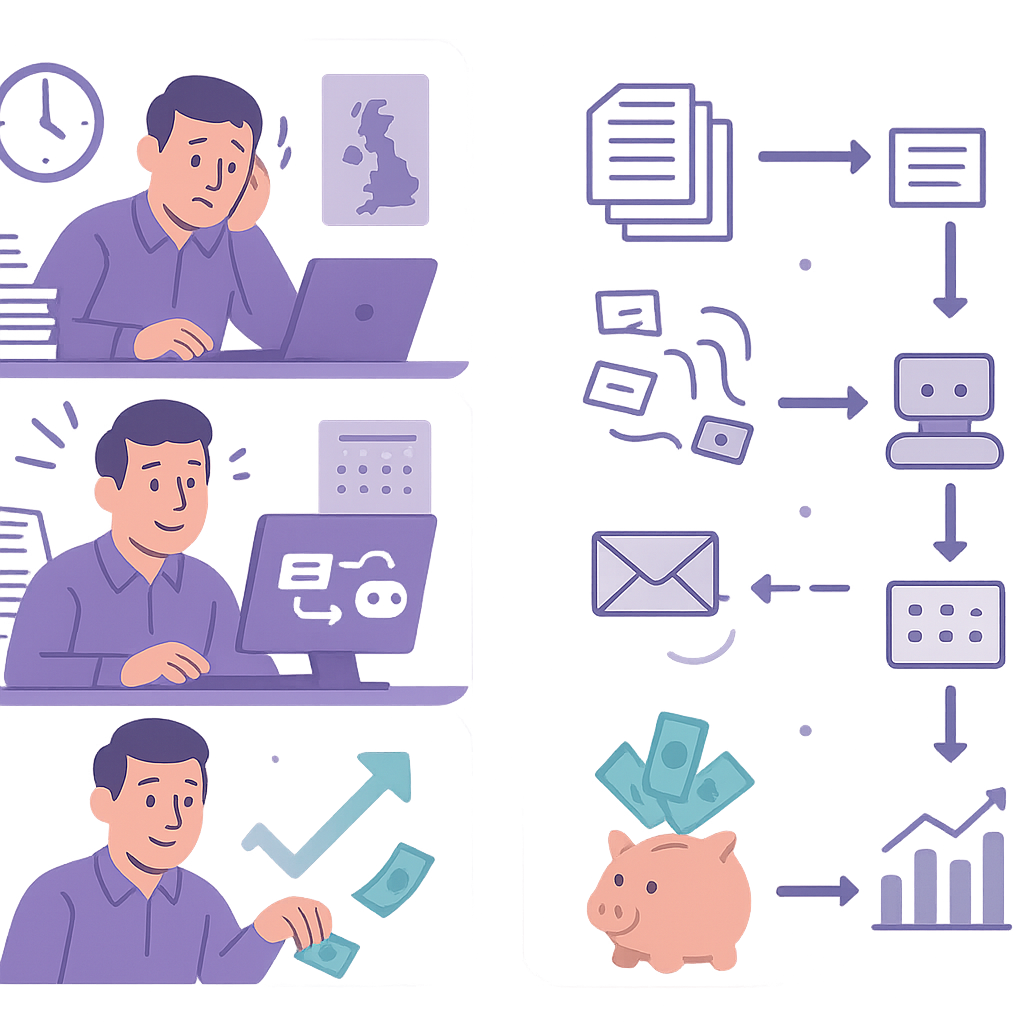
Manual invoice chasing is a relentless task that plagues many UK SMEs. Every week, business owners and accounts teams spend countless hours drafting emails, making phone calls, and updating spreadsheets to track overdue payments. This repetitive work not only steals time from more strategic activities but also leads to burnout.

Errors are commonplace in manual processes. A simple oversight, such as forgetting to follow up on an invoice or sending reminders to the wrong contact, can damage client relationships and delay payments even further. Moreover, relying on disparate tools like email and Excel makes it difficult to maintain an accurate overview of your accounts receivable.
The emotional toll cannot be overlooked. Constantly chasing payments creates stress and frustration, especially when clients delay without explanation. This cycle disrupts cash flow, forcing SMEs to juggle bills or miss growth opportunities, ultimately hindering business progress.
- Time wasted on repetitive emails and calls—up to 10 hours per week for some SMEs.
- Human errors in tracking leading to missed follow-ups or duplicate chases.
- Strained client relationships from persistent manual reminders.
- Cash flow uncertainty due to unpredictable payment timelines.

UK SMEs lose an average of £50,000 annually due to late payments, with manual chasing contributing significantly to administrative overheads (source: Federation of Small Businesses).
Why Late Payments Are a Growing Issue for UK SMEs
Late payments have long been a thorn in the side of UK SMEs, but recent economic pressures have made the issue more acute. According to the Federation of Small Businesses, over 60% of small firms experienced late payments in 2023, with average delays stretching to 30 days beyond terms. This is exacerbated by larger clients imposing extended payment terms amid cost-of-living challenges.
As businesses scale, manual processes buckle under the volume. What works for 50 invoices a month fails miserably at 500, leading to overlooked debts and mounting arrears. Client behaviours, such as ‘pay when paid’ clauses or administrative delays, compound the problem.
The ripple effects are severe: tied-up capital means delayed supplier payments, reduced investment in stock or staff, and even job losses. In a competitive UK market, SMEs unable to manage cash flow effectively risk stalling growth or facing insolvency.
- Economic uncertainty leading to longer payment cycles.
- Scaling invoice volumes overwhelming manual tracking.
- Common client excuses and tactics delaying outflows.
- Cascading impacts on operations, hiring, and expansion.

Ignoring late payments can lead to a 20-30% increase in bad debts during downturns, per UK government reports.
Invoice Chasing Automation UK Explained
Invoice chasing automation UK refers to software-driven systems that automatically send payment reminders based on predefined rules, such as due dates and payment terms. Integrated with popular accounting tools like Xero, QuickBooks, or Sage, these solutions track invoices from issuance to settlement without human intervention.
The process typically involves tiered reminders: a polite nudge at day 1 past due, a firmer follow-up at day 7, and escalation at day 30 with management involvement. This proactive approach ensures consistency and frees staff for higher-value tasks.
Benefits include faster collections—often reducing average payment times by 10-15 days—improved cash flow predictability, and preserved client relationships through professional, timely communications tailored to UK norms like VAT-inclusive invoicing.
- Automated sequences adapt to invoice age and client history.
- Seamless integration with UK accounting software.
- Real-time dashboards for oversight without micromanagement.
- Scalable to handle growing invoice volumes effortlessly.
Triggers: Due date + X days → Email/SMS reminder → Log response → Escalate if needed.
Step-by-Step Setup for Automated Invoice Reminders
Setting up invoice chasing automation UK is straightforward and can be achieved in a few hours with the right tools. Begin by choosing a compatible platform that integrates with your accounting software—options like Zapier, Make.com, or built-in features in Xero work well for SMEs.
First, map your invoice workflow: define standard terms (e.g., 30 days net), reminder triggers, and escalation points. Import your client data accurately to personalise communications.
Test rigorously in a sandbox environment before going live, sending trial reminders to internal emails. Monitor the first few weeks closely, adjusting tones and timings based on responses.
- 1. Select and connect your accounting software (e.g., Xero or QuickBooks).
- 2. Define rules: Reminder at 1, 7, 14, 30 days overdue.
- 3. Customise templates: Polite, professional language with clear payment links.
- 4. Set up notifications for exceptions (e.g., disputes).
- 5. Test end-to-end: Issue sample invoice, simulate delay, verify reminders.
- 6. Launch and review weekly KPIs like DSO (Days Sales Outstanding).
Best Practices for Effective Payment Chasing
To maximise invoice chasing automation UK, time your reminders strategically: first at 1-3 days past due to prompt early payers, escalating gradually. Personalise messages with client names and invoice specifics to maintain a human touch.
Segment clients by history—lenient for reliable payers, stricter for chronic delayers. Track key metrics like average days to pay and collection rates to refine your system.
Complement automation with relationship-building: use insights from responses to nurture key accounts, turning chases into opportunities for upsell or feedback.
- Segment clients: VIPs get gentler reminders.
- Use A/B testing for email subject lines and tones.
- Include one-click payment links (e.g., Stripe, GoCardless).
- Review monthly: Adjust based on seasonal patterns.
- Combine with early invoicing and clear terms.
Aim for under 30 days average payment time—UK benchmark for healthy SMEs.
Common Risks and How to Mitigate Them
While powerful, invoice chasing automation UK carries risks like sending reminders for already-paid invoices due to data sync issues, eroding trust. Over-frequent chases can annoy clients, harming relationships.
Compliance is key: ensure GDPR adherence in email handling and accurate VAT details. Technical glitches, such as integration failures, can halt processes.
Mitigate by thorough testing, regular audits, and customer feedback loops. Always have a manual override and pause automation during disputes.
- Risk: Duplicate reminders—Mitigate: Sync data daily.
- Risk: Client annoyance—Mitigate: Cap reminders at 3-4, offer opt-out.
- Risk: Data errors—Mitigate: Validate invoices pre-automation.
- Risk: Non-compliance—Mitigate: Use approved templates and log consents.
Test thoroughly to prevent incorrect reminders. Pause if complaints arise or errors detected. Ensure data accuracy for trust and compliance.
Take Control of Your Cash Flow with Invoice Chasing Automation
Invoice chasing automation UK offers UK SMEs a reliable path to conquering late payments, reclaiming hours of admin time, and stabilising cash flow. By shifting from manual drudgery to smart, automated workflows, businesses can focus on growth rather than collections.
Implementing these strategies requires careful setup but yields substantial rewards in efficiency and reduced stress. Start small, test diligently, and scale as confidence builds.
Consider consulting a specialist for tailored advice to ensure your system aligns perfectly with your operations, safeguarding your financial health long-term.
Key points
- Manual invoice chasing wastes precious time and exacerbates cash flow issues for UK SMEs.
- Late payments are rampant; structured automation delivers reliable late payment solutions.
- Invoice chasing automation UK simplifies reminders, speeds up collections, and reduces admin burden.
- Implement step-by-step with testing to ensure smooth operation.
- Monitor performance and customer feedback to refine your payment chasing workflow continually.
- Act now to safeguard your business’s financial health without added stress.
Frequently asked questions
Is invoice chasing automation suitable for small UK businesses?
Yes, invoice chasing automation is highly suitable for UK SMEs of all sizes, from sole traders to medium enterprises handling hundreds of invoices monthly. It scales effortlessly with your business growth, integrating with common tools like Xero or QuickBooks, and reduces the administrative burden without requiring advanced technical skills. The key is starting with clear processes and accurate data to ensure reliable performance.
How long does it typically take to set up invoice chasing automation?
Setup time varies depending on your current systems, data quality, and the complexity of your invoicing processes, but many UK SMEs can have a basic workflow running in a few hours to a couple of days. Factors like integration with existing accounting software and thorough testing influence this, so planning ahead and testing iteratively helps achieve smooth implementation.
Will invoice chasing automation work with my existing accounting software?
Most invoice chasing automation solutions integrate seamlessly with popular UK accounting platforms such as Xero, QuickBooks, and Sage. These no-code tools like Zapier or Make.com bridge any gaps, allowing you to automate reminders directly from your invoice data. Always check compatibility and start with a trial integration to confirm it fits your setup.
How do I ensure GDPR compliance when using automated invoice reminders?
To maintain GDPR compliance, ensure you have legitimate interest or consent for sending reminders to business contacts, use accurate and minimal personal data, and include clear opt-out options in every email. Regularly audit your processes, keep records of communications, and consult resources from the ICO to align with UK data protection rules, especially when personalising messages.
What should I do if customers complain about automated reminders?
If customers complain, pause the automation for that client immediately, review the invoice status manually, and respond personally to resolve any issues. Use feedback to refine your reminder rules, such as adding caps on frequencies or segmentation for different client types, ensuring you maintain positive relationships while protecting your cash flow.
Ready to End Late Payment Stress?
Get personalised guidance from Business Automations UK to implement invoice chasing automation that fits your SME perfectly. We’ll review your current processes and help you get started without any pressure.
This article is for general information only. It is not legal, financial, or compliance advice. If you are unsure about GDPR, HMRC, or regulatory obligations, speak to a qualified professional or reach out to us for more information.
Related Posts
Should I Use AI to Build My Website? Pros, Cons & Costs

How to Automate Client Onboarding for UK SMEs: A Practical Guide
How to Automate Insurance Claim Processing for UK SMEs: Streamline Approvals & Reduce Admin

How to Automate Subscription Billing for UK SMEs: Reduce Churn & Streamline Recurring Payments
How to Automate Health and Safety Incident Reporting for UK SMEs: Streamline Compliance & Reduce Liability
How to Automate Purchase Order Approval Workflows for UK SMEs: Cut Delays & Boost Compliance
How to Automate Vendor Invoice Processing for UK SMEs: Speed Up Payments & Reduce Errors
How to Automate Invoice Payment Chasing for UK Small Businesses: A Proven 5-Step Guide
How to Automate Supplier Onboarding for UK SMEs: Streamline Procurement & Ensure Compliance

How to Automate Inventory Management for UK SMEs: Reduce Stock Errors & Boost Efficiency
How to Automate Risk Assessment Workflows for UK SMEs: A Compliance Guide
How to Automate GDPR Data Retention Policies for UK SMEs: Delete Personal Data Lawfully
- Should I Use AI to Build My Website? Pros, Cons & Costs
- How to Automate Client Onboarding for UK SMEs: A Practical Guide

- How to Automate Insurance Claim Processing for UK SMEs: Streamline Approvals & Reduce Admin
- How to Automate Subscription Billing for UK SMEs: Reduce Churn & Streamline Recurring Payments
- How to Automate Health and Safety Incident Reporting for UK SMEs: Streamline Compliance & Reduce Liability