Unlocking Scalable Growth for Your UK SME
Is your UK SME ready to grow but held back by manual processes eating up time and resources? Discover how to scale UK SME automation with 5 proven workflows.
The Pitfalls of Manual Scaling in UK SMEs
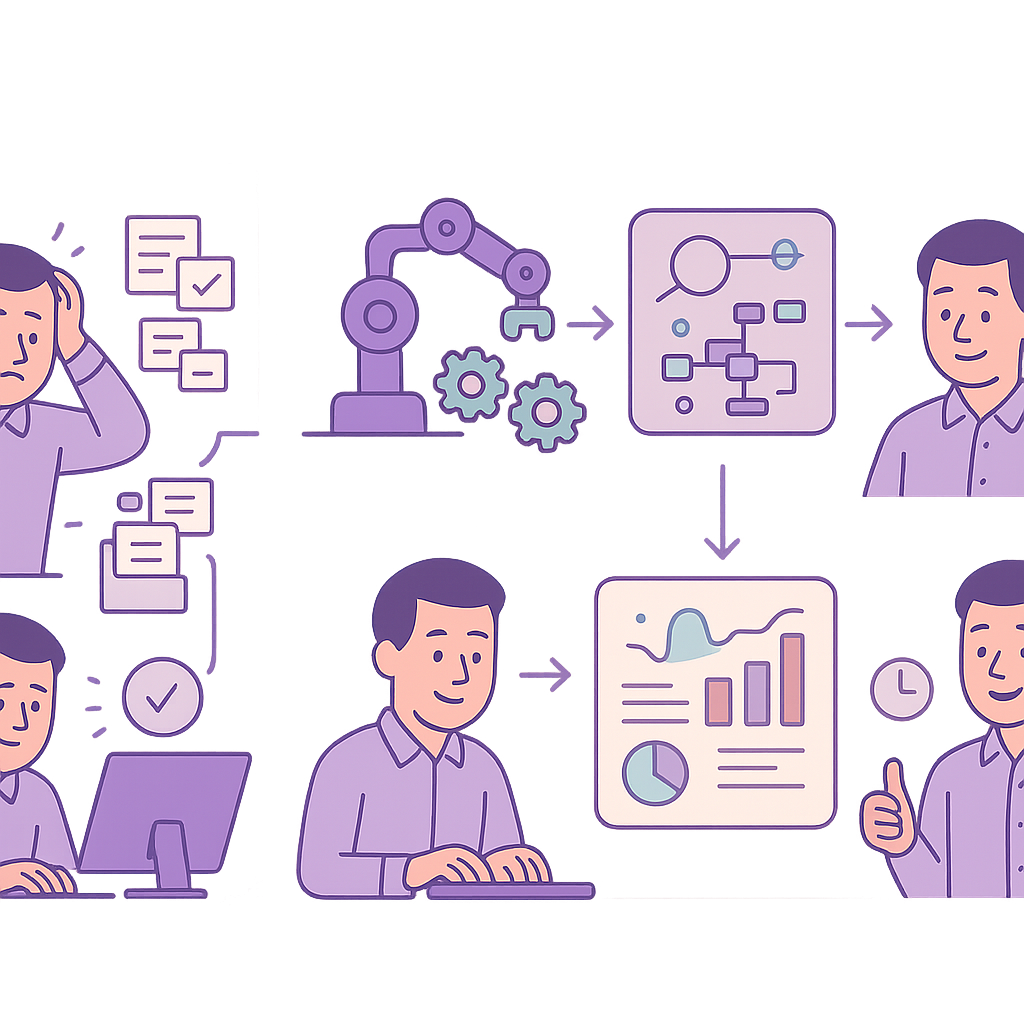
Many UK SMEs hit a growth ceiling when manual processes can’t keep pace with increasing business volume. Tasks like chasing leads, processing orders, issuing invoices, and handling customer support become time-consuming black holes that drain resources and frustrate teams.

For instance, sales teams juggling emails and spreadsheets for lead tracking often miss follow-ups, resulting in lost revenue. Operations staff manually updating inventory across platforms lead to stockouts or overstocking, tying up capital unnecessarily. These issues compound as the business scales, turning small inefficiencies into major obstacles.
Real-world examples abound: a Manchester-based e-commerce SME reported spending 20 hours weekly on manual order fulfilment, delaying deliveries and harming customer satisfaction. Similarly, service firms in London waste days reconciling invoices by hand, exposing them to errors and late payments.
- Admin overload: Teams bogged down by repetitive tasks, reducing focus on core activities like innovation and customer service.
- Slow response times: Manual handling delays lead nurturing, order processing, and support, eroding competitive edge.
- Error-prone operations: Human mistakes in data entry multiply with volume, leading to financial losses and compliance risks.
- Scaling limits: Without automation, growth requires linear staff increases, inflating costs exponentially.

UK SMEs using manual processes lose an average of 15-20 hours per employee weekly on admin (Institute of Directors survey). This equates to £10,000+ annual cost per team member at average wages.
Risks of Delaying Scale UK SME Automation
Delaying scale UK SME automation exposes businesses to significant financial, operational, and regulatory risks. As manual workloads intensify, errors escalate, cash flow suffers, and customer trust erodes, potentially derailing growth trajectories.
Financially, late payments from manual invoicing can tie up thousands in receivables; a study by Xero found UK SMEs lose £50,000 on average annually to payment delays. Operationally, stock discrepancies lead to costly expedited shipping or lost sales. Compliance risks loom large under GDPR for mishandled customer data or VAT errors via HMRC non-compliance.
Customer dissatisfaction from slow support amplifies churn rates, with 70% of UK consumers switching brands after poor experiences (Forrester). Missed market opportunities arise as competitors who automate scale faster, capturing market share.
- Financial leakage: Average £20k-£50k yearly from errors and delays (BDO report).
- Compliance fines: GDPR breaches up to 4% of turnover; HMRC penalties for inaccurate records.
- Customer churn: 25-30% higher due to slow responses.
- Competitive disadvantage: Automated rivals grow 2-3x faster.

Ignoring automation risks irreversible damage: 40% of UK SMEs fail within 5 years due to scaling inefficiencies (FSB data). Start automating now to safeguard your growth.
1. Sales Pipeline Automation: The Foundation for Scale UK SME Automation
Sales pipeline automation forms the bedrock of scale UK SME automation by capturing leads, nurturing them, and closing deals seamlessly. Tools like Zapier integrated with your CRM (e.g., Pipedrive or HubSpot) and website forms eliminate manual data entry and ensure no lead slips through.
Imagine leads from your website, LinkedIn ads, or Google Forms instantly tagged, scored, and assigned to sales reps with personalised follow-up sequences. This scales outreach exponentially, converting more prospects into customers as volume grows.
UK-specific integrations, such as with Mailchimp for GDPR-compliant emailing, keep everything legal and efficient. Businesses report 30-50% sales uplift from such automations without expanding teams.
- Boosts conversion rates by timely follow-ups.
- Frees sales team for high-value closing.
- Scales to handle 10x leads effortlessly.
2. Order Fulfilment Automation for Efficient Scaling
Order fulfilment automation streamlines the journey from customer purchase to delivery, critical for e-commerce and service SMEs scaling operations. Platforms like Shopify Flows or Make.com sync orders with inventory systems, shipping providers, and notifications in real-time.
When an order hits your store, automation updates stock levels across warehouses, generates picking lists, notifies couriers like Royal Mail or DPD, and sends customer tracking emails—all without manual intervention. This cuts fulfilment time from hours to minutes.
For UK businesses, integrations with Linnworks or WooCommerce ensure seamless logistics compliance, minimising errors that plague manual processes and enabling confident scaling.
- Reduces fulfilment errors by 90%.
- Speeds delivery, boosting satisfaction.
- Handles peak seasons without extra staff.
3. Invoicing and Payments Automation to Accelerate Cash Flow
Invoicing automation accelerates cash flow by generating, sending, and chasing payments automatically, integrated with accounting software like Xero or QuickBooks. Link it to your e-commerce or CRM for instant invoice creation upon order completion.
Payments via Stripe or GoCardless trigger updates in your ledger, with overdue reminders sent progressively. This reduces days sales outstanding (DSO) significantly, freeing capital for growth.
Tailored for UK SMEs, these workflows embed VAT calculations and Making Tax Digital compliance, avoiding penalties while saving hours weekly on finance admin.
- Cuts DSO by 15-20 days.
- Eliminates invoice errors.
- Automates reminders, recovering 80% more late payments.
Automated Xero integrations auto-populate VAT returns, simplifying Making Tax Digital submissions.
4. Customer Support Automation for Retention and Growth
Customer support automation uses chatbots, ticket systems like Zendesk or Intercom, and feedback loops to handle enquiries 24/7, freeing agents for complex issues. Incoming queries from email, chat, or social are categorised, routed, and responded to instantly.
Self-service FAQs and automated resolutions resolve 60% of issues without human input, while escalations include full context for quick handling. GDPR-compliant data handling ensures privacy.
This workflow boosts retention by 25% and uncovers upsell opportunities through sentiment analysis, supporting growth as your UK SME expands.
- 24/7 availability improves satisfaction.
- Reduces response time to minutes.
- Increases upsell via proactive engagement.
Always enable consent logging and data minimisation in support tools to comply with UK GDPR.
5. Reporting and Insights Automation for Data-Driven Decisions
Reporting automation consolidates data from CRM, e-commerce, finance, and support into interactive dashboards via Google Looker Studio or Power BI. Set triggers for daily/weekly KPI reports emailed to stakeholders.
Visualise metrics like sales velocity, churn rates, and cash flow trends without manual Excel wrangling. AI-powered insights flag anomalies, like dropping conversions, for proactive fixes.
For UK SMEs, this data-driven approach aligns with strategic growth, ensuring decisions are informed and scalable.
- Saves 10+ hours weekly on reporting.
- Spot trends early for agile pivots.
- Supports investor pitches with clean visuals.
Scale Your UK SME with Confidence
Implementing these five workflows for scale UK SME automation transforms operational bottlenecks into streamlined engines of growth. From sales to insights, each targets high-impact areas, delivering efficiency gains, compliance assurance, and scalability without massive overheads.
Start small—pick one workflow aligned with your biggest pain point—and expand iteratively. Regular reviews ensure systems evolve with your business.
Consulting with automation experts can tailor these to your unique setup, positioning your UK SME for long-term success in a dynamic market.
Key points
- Scale UK SME automation via targeted workflows eliminates manual bottlenecks and supports sustainable growth.
- Start with sales pipeline and order fulfilment for quickest wins without heavy investment.
- UK compliance is built-in with popular tools; always verify integrations.
- Measure ROI through time saved, error reduction, and revenue growth.
- Implement one workflow at a time to minimise disruption and maximise impact.
- Automation positions your SME for long-term scalability in the UK market.
Frequently asked questions
Is scale UK SME automation suitable for small businesses?
Yes, scale UK SME automation is highly suitable for small businesses, as it allows you to handle growing volumes without proportionally increasing staff. The workflows outlined, such as sales pipeline and order fulfilment automation, can start small and scale with your needs, integrating with common tools like Xero or Shopify. Success depends on clear processes and data quality, making it accessible even for SMEs with limited technical expertise.
How long does it take to set up these automation workflows?
The time to set up automation workflows varies based on your current systems, process complexity, and team familiarity with tools like Zapier or Make.com. Simple integrations, such as linking forms to a CRM, can take a few hours, while comprehensive setups like full reporting dashboards might require days or weeks. Starting with one workflow and testing iteratively minimises disruption.
How can I ensure GDPR compliance with scale UK SME automation?
GDPR compliance is achievable by selecting tools with built-in UK data protection features, such as consent logging in email automations and data minimisation in support systems. Always map data flows, enable audit trails, and conduct regular reviews. Resources from the ICO can guide implementation, but consulting a specialist ensures your specific setup meets regulatory standards.
Will these automations work with my existing business tools?
Most scale UK SME automation workflows integrate seamlessly with popular UK tools like Pipedrive, Xero, Shopify, and Zendesk via platforms such as Zapier or native APIs. Compatibility depends on your tech stack, but the majority of SMEs use compatible systems. A quick audit can confirm fit, allowing you to build on what you already have without full replacements.
What happens if an automation workflow breaks or fails?
Robust automations include monitoring dashboards and alerts for issues like API failures or data sync errors, enabling quick fixes. Tools often have fallback options, such as email notifications, to prevent complete breakdowns. Regular testing and backups mitigate risks, and many platforms offer support, but having a contingency plan for manual overrides is advisable for business continuity.
Ready to Scale Your UK SME with Automation?
Unsure where to start or how these workflows fit your operations? Reach out to Business Automations UK for expert guidance tailored to your business needs.
This article is for general information only. It is not legal, financial, or compliance advice. If you are unsure about GDPR, HMRC, or regulatory obligations, speak to a qualified professional or reach out to us for more information.
Related Posts
Should I Use AI to Build My Website? Pros, Cons & Costs

How to Automate Client Onboarding for UK SMEs: A Practical Guide
How to Automate Insurance Claim Processing for UK SMEs: Streamline Approvals & Reduce Admin

How to Automate Subscription Billing for UK SMEs: Reduce Churn & Streamline Recurring Payments
How to Automate Health and Safety Incident Reporting for UK SMEs: Streamline Compliance & Reduce Liability
How to Automate Purchase Order Approval Workflows for UK SMEs: Cut Delays & Boost Compliance

How to Automate Vendor Invoice Processing for UK SMEs: Speed Up Payments & Reduce Errors
How to Automate Invoice Payment Chasing for UK Small Businesses: A Proven 5-Step Guide
How to Automate Supplier Onboarding for UK SMEs: Streamline Procurement & Ensure Compliance

How to Automate Inventory Management for UK SMEs: Reduce Stock Errors & Boost Efficiency
How to Automate Risk Assessment Workflows for UK SMEs: A Compliance Guide
How to Automate GDPR Data Retention Policies for UK SMEs: Delete Personal Data Lawfully
- Should I Use AI to Build My Website? Pros, Cons & Costs
- How to Automate Client Onboarding for UK SMEs: A Practical Guide

- How to Automate Insurance Claim Processing for UK SMEs: Streamline Approvals & Reduce Admin
- How to Automate Subscription Billing for UK SMEs: Reduce Churn & Streamline Recurring Payments
- How to Automate Health and Safety Incident Reporting for UK SMEs: Streamline Compliance & Reduce Liability