How to Automate GDPR Data Retention Policies for UK SMEs: Delete Personal Data Lawfully
Faced with endless manual checks to delete customer data under GDPR, UK SMEs risk fines and inefficiency – until GDPR data retention automation steps in.
Navigating GDPR Data Retention Challenges as a UK SME
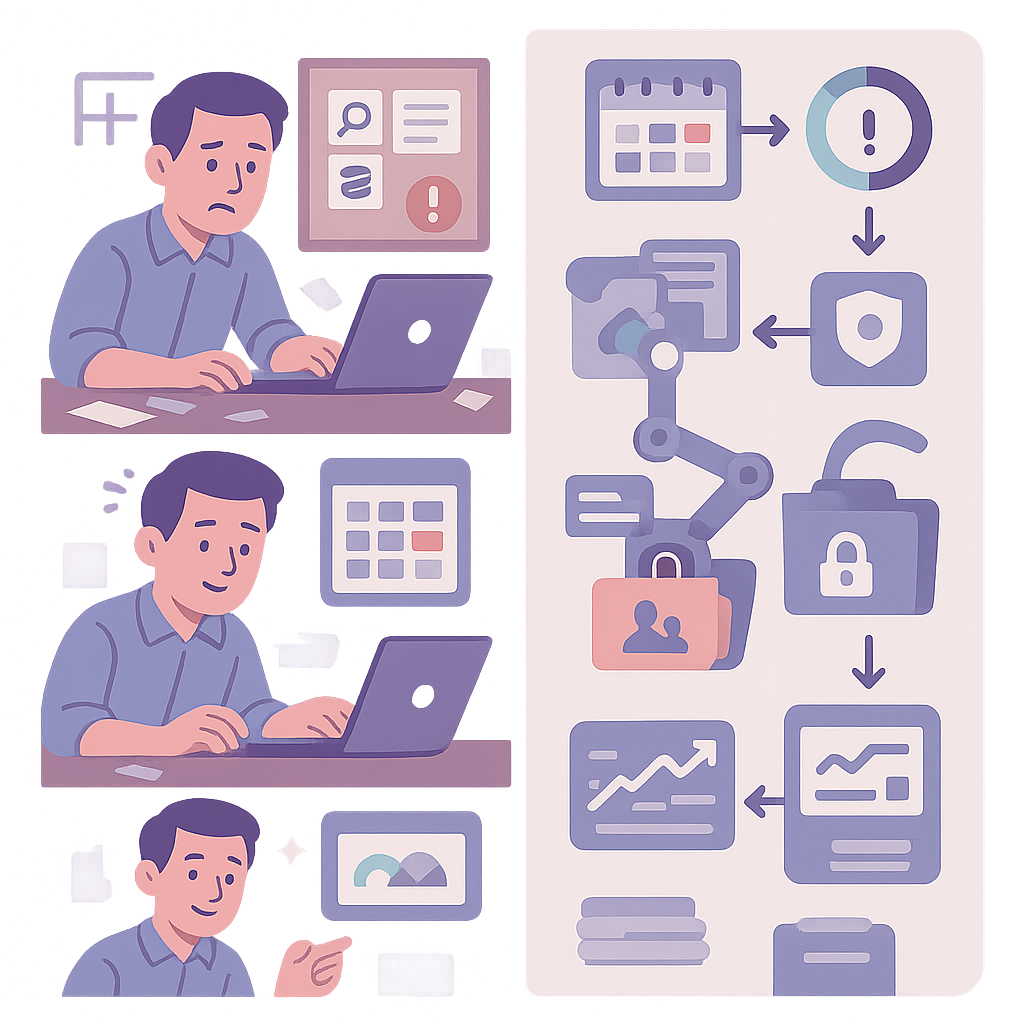
GDPR data retention automation UK SMEs need is essential for lawfully managing personal data lifecycles without constant manual oversight. Many small businesses struggle with determining when data must be deleted, leading to over-retention risks and compliance headaches.
This guide breaks down the rules, pitfalls, and practical steps to automate data deletion workflows, helping you save time and stay on the right side of UK GDPR enforcement.
Whether you handle customer emails, CRM records, or employee files, automation ensures nothing slips through the cracks.
What Does GDPR Say About Data Retention?
The General Data Protection Regulation (GDPR), as retained in UK law under the Data Protection Act 2018, mandates strict rules on how long businesses can hold personal data. At its heart is the storage limitation principle in Article 5(1)(e), which states that personal data should be kept in a form that permits identification of data subjects for no longer than necessary for the purposes for which it is processed.

This means UK SMEs must define clear retention periods based on the purpose of data collection. For example, customer transaction data might need to be retained for six or seven years for accounting purposes under UK tax law, but marketing consent records could expire after two years if not renewed. The Information Commissioner’s Office (ICO), the UK data protection authority, emphasises data minimisation – only keeping what you need – and provides guidance on aligning retention with legitimate business needs.
Failing to comply can result in hefty fines, up to £17.5 million or 4% of global annual turnover, whichever is higher. Real-world ICO enforcement actions against SMEs for over-retention highlight the risks, making automated systems vital for consistent adherence.
- Common retention periods: Customer contracts (6-7 years), Marketing consents (2 years or until withdrawn), Employee records (duration of employment + 6 years), Website analytics (26 months max per ICO guidance).
- Key GDPR principles: Storage limitation, data minimisation, accountability (prove compliance via records).

Personal data must be kept no longer than necessary. Retention periods should be established at collection and reviewed regularly. ICO recommends documenting these in a data retention policy.
The Dangers of Manual Data Retention Processes in UK SMEs
Relying on spreadsheets, emails, or calendar reminders for data retention leads to inevitable pitfalls for resource-strapped UK SMEs. Manual processes consume hours weekly in repetitive checks, diverting staff from core business activities like sales or service delivery.
Human error is rampant: overlooked entries mean data lingers unlawfully, exposing businesses to complaints from data subjects or ICO spot-checks. During audits, reconstructing timelines from scattered notes becomes a nightmare, often revealing gaps that trigger investigations.
Recent ICO fines against UK SMEs – such as a £100,000 penalty for a retailer over-retaining customer details – underscore the financial peril. Beyond fines, reputational damage from data breaches linked to poor retention practices can erode customer trust permanently.
- Time drain: 5-10 hours per month per employee on manual reviews.
- Error rates: Up to 20% miss rate in deletions per industry studies.
- Audit failures: Lack of logs leads to inability to prove compliance.
- Scaling issues: Impossible to manage as data volumes grow.

Fines start at £100 for minor breaches but escalate quickly. Over-retention contributed to 15% of ICO actions in 2023. Manual processes rarely produce defensible audit trails.
Benefits of GDPR Data Retention Automation for UK SMEs
GDPR data retention automation transforms compliance from a burden into a seamless backdrop. Automated workflows schedule deletions based on predefined rules, eliminating manual hunts through databases or files.
This reduces workload by up to 80%, freeing teams for growth-focused tasks. Built-in logging creates irrefutable audit trails, proving to the ICO that deletions occurred on time – a key defence in any scrutiny.
For growing SMEs, scalability is automatic: handle 10 or 10,000 records without added effort. Cost savings accrue from avoided fines and efficiency gains, often paying for the system within months through reclaimed productivity.
- Automatic scheduling: Deletes data at end of retention period.
- Audit-ready logs: Timestamped records of all actions.
- Error-proof: No forgotten entries or missed reviews.
- Scalable: Adapts to business growth effortlessly.
- Cost-effective: ROI from time savings and risk reduction.
Automation can cut data management time by 70-90%, per UK business surveys. Ensures consistent application across all data types.
How to Set Up Automated Data Deletion Workflows
Start by auditing your current data: map what personal data you hold, why, and current retention practices. Use tools like spreadsheets initially to list categories such as customer emails (retain 2 years post-consent) or invoices (7 years).
Define rules: For each category, set ‘if-then’ triggers, e.g., ‘delete CRM record if no activity in 24 months and consent expired’. Integrate with your CRM, email platform, or file storage via no-code automation tools.
Test rigorously: Run simulations on sample data to verify deletions occur correctly without accidental wipes. Monitor the first few cycles, then go live with staff notifications for exceptions.
Ongoing: Set alerts for rule reviews annually or on law changes, ensuring workflows evolve with your business.
- 1. Audit data flows and categories.
- 2. Define purpose-based retention rules.
- 3. Configure triggers in automation platform.
- 4. Test and validate workflows.
- 5. Deploy with monitoring and backups.
Always test on non-production data. Misconfigured rules can lead to premature deletions, breaching contracts or losing valuable insights.
Choosing the Right Automation Tools for UK SMEs
Prioritise tools hosted in the UK or EEA to meet data transfer rules, with explicit GDPR compliance certifications. Ease of use is key for non-technical teams – look for drag-and-drop interfaces and pre-built templates for data deletion.
Integration matters: Ensure compatibility with SME staples like Xero, HubSpot, Google Workspace, or Microsoft 365. Features should include custom retention rules, deletion previews, and exportable reports for ICO submissions.
Budget wisely: Start with affordable plans under £50/month, scaling as needed. Free trials let you test fit without commitment. Vendor support and UK-based assistance add reassurance.
- GDPR/UK compliant hosting.
- No-code setup for quick wins.
- Integrations with CRM/accounting tools.
- Custom rules and audit reports.
- Affordable, scalable pricing.
- Strong customer support.
Seek: Rule-based scheduling, API integrations, activity logs, deletion confirmations. Avoid vendor lock-in with export options.
Best Practices for Ongoing GDPR Data Retention Compliance
Regularly review your retention policy – at least annually or after business changes – to align with evolving needs and ICO updates. Train staff on recognising exceptions, like legal holds during disputes.
Monitor automation dashboards for anomalies, such as high deletion volumes indicating data influx. Document everything: policies, workflows, and logs form your compliance shield.
Prepare for audits by running mock ICO requests, ensuring data is retrievable or deletable on demand. Foster a culture of data hygiene to complement tech solutions.
- Annual policy reviews.
- Staff training sessions.
- Exception handling protocols.
- Performance monitoring.
- Mock audit drills.
Suspend automation for data subject to litigation or investigations. Document suspensions clearly to avoid breaches.
Achieve Compliant Data Management with Automation
Implementing GDPR data retention automation UK SMEs can rely on eliminates manual risks and embeds compliance into daily operations. From understanding Article 5 to selecting tools and maintaining workflows, this approach safeguards your business while boosting efficiency.
Don’t let data admin overwhelm your growth – automate today for peace of mind tomorrow. Consider consulting a specialist to tailor solutions to your unique data landscape.
With sensible automation, UK SMEs turn GDPR from a hurdle into a competitive edge, focusing on customers rather than compliance chores.
Key points
- GDPR requires UK SMEs to delete personal data when no longer needed, with fines for non-compliance.
- Manual processes lead to errors, time waste, and regulatory risks.
- GDPR data retention automation UK SMEs implement ensures lawful deletions, audit trails, and efficiency.
- Audit your data first, then map workflows and select compliant tools.
- Ongoing reviews and training sustain compliance benefits.
- Automation frees your team for business growth, not admin drudgery.
Frequently asked questions
Is GDPR data retention automation suitable for small UK businesses?
Yes, GDPR data retention automation is well-suited for UK SMEs of all sizes, as modern no-code tools offer scalable solutions that start simple and grow with your business. The setup depends on factors like your current systems, data volume, and process clarity, allowing small teams to automate deletions without needing dedicated IT staff.
How do I determine appropriate retention periods for personal data under GDPR?
Retention periods should be based on the purpose for which data was collected, such as legal requirements or business needs, as outlined in GDPR’s storage limitation principle. UK SMEs should document these in a policy, consulting ICO guidance, and review them regularly, considering factors like industry standards and data quality.
What are the risks of automated data deletion, and how can they be managed?
While automation minimises human error, risks like premature deletion can arise from misconfigured rules. Mitigate this by thoroughly testing workflows on sample data, implementing exception alerts, and maintaining backups. Compliance depends on clear rules and ongoing monitoring tailored to your operations.
Can data retention automation integrate with common SME tools like CRM or accounting software?
Most automation platforms integrate seamlessly with popular UK SME tools such as Xero, HubSpot, or Microsoft 365, enabling triggers based on data activity or consent expiry. Compatibility varies by tool, so check integrations and start with free trials to ensure they fit your existing setup.
How does automation help with proving compliance during ICO audits?
Automation generates timestamped logs and audit trails of all deletions, providing clear evidence that data was retained no longer than necessary. This accountability feature, aligned with GDPR requirements, simplifies responding to ICO requests, though effectiveness relies on proper configuration and documentation.
Ready to Automate Your GDPR Data Retention?
Get expert guidance from Business Automations UK to audit your data and set up compliant workflows that fit your SME. Reduce manual risks and ensure peace of mind with tailored automation.
This article is for general information only. It is not legal, financial, or compliance advice. If you are unsure about GDPR, HMRC, or regulatory obligations, speak to a qualified professional or reach out to us for more information.
Related Posts
Should I Use AI to Build My Website? Pros, Cons & Costs


How to Automate Client Onboarding for UK SMEs: A Practical Guide

How to Automate Insurance Claim Processing for UK SMEs: Streamline Approvals & Reduce Admin

How to Automate Subscription Billing for UK SMEs: Reduce Churn & Streamline Recurring Payments
How to Automate Health and Safety Incident Reporting for UK SMEs: Streamline Compliance & Reduce Liability
How to Automate Purchase Order Approval Workflows for UK SMEs: Cut Delays & Boost Compliance

How to Automate Vendor Invoice Processing for UK SMEs: Speed Up Payments & Reduce Errors
How to Automate Invoice Payment Chasing for UK Small Businesses: A Proven 5-Step Guide

How to Automate Supplier Onboarding for UK SMEs: Streamline Procurement & Ensure Compliance

How to Automate Inventory Management for UK SMEs: Reduce Stock Errors & Boost Efficiency
How to Automate Risk Assessment Workflows for UK SMEs: A Compliance Guide
How to Automate GDPR Data Retention Policies for UK SMEs: Delete Personal Data Lawfully
- Should I Use AI to Build My Website? Pros, Cons & Costs
- How to Automate Client Onboarding for UK SMEs: A Practical Guide

- How to Automate Insurance Claim Processing for UK SMEs: Streamline Approvals & Reduce Admin
- How to Automate Subscription Billing for UK SMEs: Reduce Churn & Streamline Recurring Payments
- How to Automate Health and Safety Incident Reporting for UK SMEs: Streamline Compliance & Reduce Liability