Why Manual Purchase Order Approvals Are Holding UK SMEs Back
Is your UK SME losing hours every week chasing purchase order approvals, risking delays and compliance slips?
Why Manual Purchase Order Approvals Are Holding UK SMEs Back
In today’s fast-paced business environment, purchase order approval automation UK SMEs is no longer a luxury but a necessity to eliminate manual bottlenecks. Many small and medium enterprises still rely on email chains and spreadsheets for PO approvals, leading to frustrating delays and errors.
These inefficiencies not only waste valuable time for finance teams and managers but also expose businesses to financial risks and regulatory non-compliance, particularly under UK GDPR requirements.
This guide explores how automating your purchase order workflows can cut delays, boost efficiency, and ensure your SME stays compliant without complex setups.
Common Problems with Manual PO Approvals
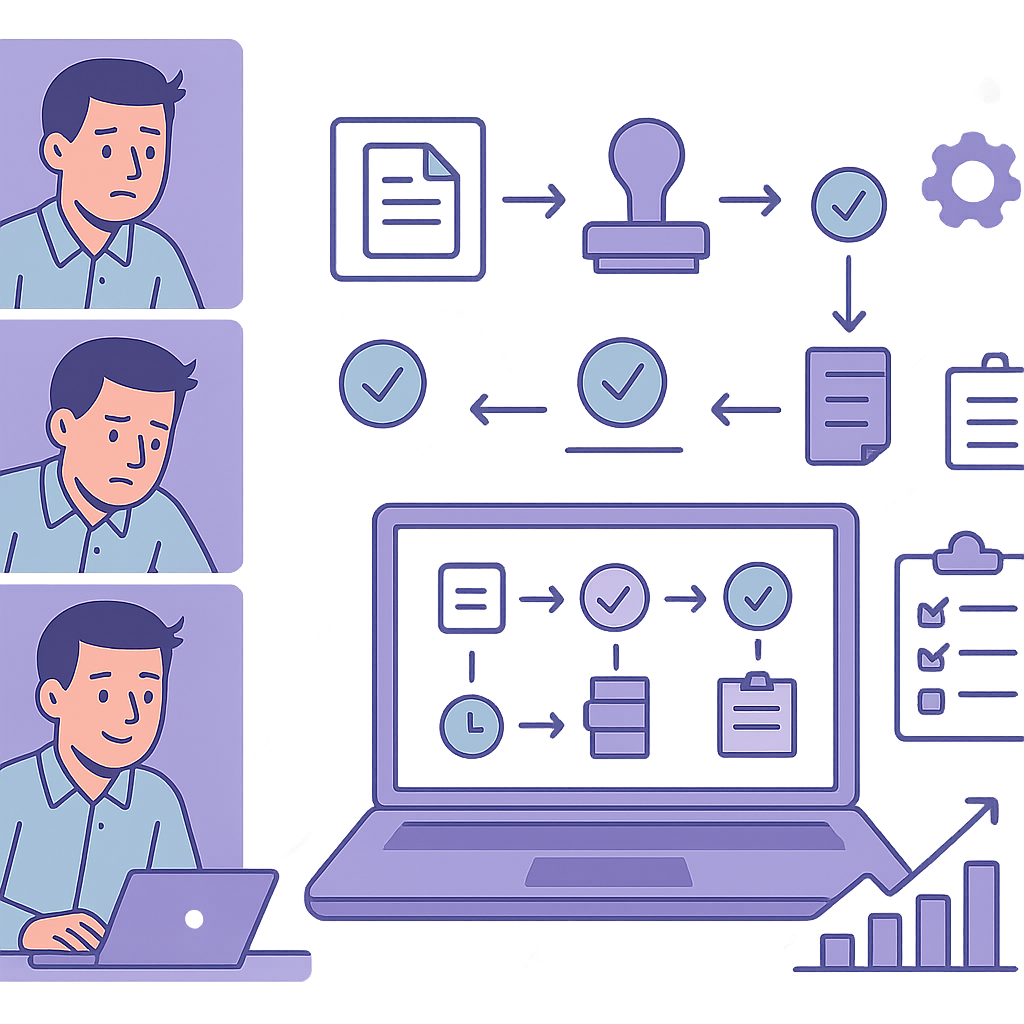
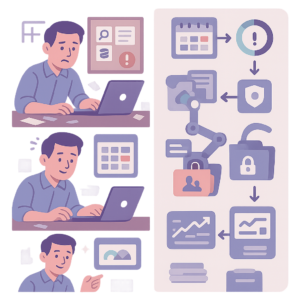
Manual purchase order approvals plague many UK SMEs, turning what should be a straightforward process into a time-consuming ordeal. Employees often spend hours drafting POs in spreadsheets or Word documents, only to email them around for signatures, leading to inevitable bottlenecks.
Emails get buried in inboxes, attachments are overlooked, and approvers are on holiday or in meetings, causing days of delay. Human errors, such as incorrect amounts or supplier details, creep in, requiring restarts from scratch.
As businesses grow, these issues compound. What works for a team of 10 becomes chaotic at 50, disrupting cash flow as suppliers wait for confirmed orders and payments lag behind.
- Approval bottlenecks when managers are unavailable.
- Lost or misplaced emails and attachments.
- Human errors in data entry and calculations.
- Time wasted chasing signatures via phone or in-person.
- Poor visibility into pending approvals, leading to duplicate orders.
Manual processes rarely scale. As your SME expands, expect exponential increases in delays, errors, and frustrated staff, potentially harming supplier relationships and cash flow.
Risks of Delayed PO Approvals for UK SMEs
Delayed PO approvals carry significant risks for UK SMEs, starting with financial implications. Late approvals mean delayed orders, rushed supplier deliveries at premium costs, or missed early-payment discounts, directly hitting profitability.
Operationally, bottlenecks halt projects, frustrate teams, and damage supplier trust. Over time, this leads to rushed decisions, like approving excessive spends to catch up, inflating budgets unnecessarily.
Compliance risks are particularly acute under UK regulations. Mishandled PO data, such as supplier personal information, can breach GDPR, inviting fines up to 4% of global turnover. Inadequate audit trails from emails make proving compliance impossible during audits.
- Financial losses from late fees and missed discounts.
- Over-spending due to panic approvals.
- GDPR violations from poor data handling.
- Damaged supplier relationships and reliability issues.
- Scalability blocks as team size grows.
UK SMEs face GDPR scrutiny in procurement. Manual approvals lack proper data logs, risking hefty fines and reputational damage. Automation provides essential audit trails.
Key Benefits of Purchase Order Approval Automation for UK SMEs
Purchase order approval automation UK SMEs transforms procurement by slashing processing times from days to minutes. Automated routing sends POs to the right approvers instantly, with real-time status updates eliminating chase-ups.
Error rates plummet as systems enforce rules, validate data, and prevent duplicates. Finance teams gain visibility into spend with dashboards, enabling better budgeting and forecasting.
Compliance becomes embedded, with automatic GDPR checks, data encryption, and full audit trails. Staff are freed for higher-value tasks, boosting overall productivity and morale.
- Process POs 80% faster on average.
- Reduce errors by up to 90%.
- Real-time spend visibility and reporting.
- Seamless integration with Xero, QuickBooks, and Sage.
- Mobile approvals for on-the-go managers.
- Automatic reminders and escalations.
Expect immediate gains: fewer emails, happier teams, and tighter budget control. Many SMEs report ROI within months through saved time and avoided errors.
How Purchase Order Approval Automation Works
Purchase order approval automation follows a streamlined workflow designed for efficiency. It begins with PO creation in your accounting software or dedicated procurement tool, where details like supplier, amount, and items are entered.
The system then applies predefined rules—such as amount thresholds or department—to route the PO to appropriate approvers. Notifications ping via email, app, or SMS, with mobile access for quick reviews.
Once approved (or rejected with reasons), the PO auto-updates status, notifies purchasing, and archives with full logs. Conditional logic handles multi-level approvals or escalations seamlessly.
- 1. PO creation and submission.
- 2. Rule-based routing to approvers.
- 3. Notifications and mobile approvals.
- 4. Approval/rejection with comments.
- 5. Auto-posting to accounting and archiving.
- 6. Reporting and audit trails.
Step-by-Step Guide to Implementing PO Approval Automation
Start by mapping your current PO process: document steps, pain points, and stakeholders. Identify tools like Xero or Zapier that integrate well with your setup.
Choose a platform suited for UK SMEs—look for GDPR compliance, UK support, and easy integrations. Set up approval rules based on spend limits, then test with sample POs.
Train your team with short sessions, monitor initial runs, and refine rules. Common pitfalls include over-complicating rules or skipping data migration planning.
- Assess current workflow and tools.
- Select GDPR-compliant automation software.
- Configure rules and integrations.
- Test thoroughly with real scenarios.
- Train staff and go live.
- Monitor and optimise post-launch.
Avoid under-testing: unproven automations can cause more chaos. Always pilot with low-value POs first.
Best Practices for GDPR-Compliant PO Automation in UK SMEs
Prioritise data security by selecting tools with end-to-end encryption and UK-based servers. Implement role-based access to ensure only authorised personnel handle sensitive supplier data.
Maintain comprehensive audit trails for every approval, facilitating GDPR compliance checks. Customise workflows to your SME’s structure—simple for small teams, robust for growing ones.
Regularly review performance metrics like approval times and error rates. Scale gradually and consider expert audits for complex setups to avoid compliance gaps.
- Use encrypted, UK-hosted platforms.
- Enforce role-based access controls.
- Enable full audit logging.
- Customise rules without over-complication.
- Integrate with existing accounting software.
- Conduct periodic security reviews.
Choose tools certified for GDPR with features like data minimisation and right-to-erasure support in procurement data.
Take Control of Your Procurement: Next Steps for Automation
Embracing purchase order approval automation UK SMEs empowers your business to overcome manual hurdles, ensuring faster, safer procurement that scales with growth. From cutting delays to embedding compliance, the advantages are clear and achievable.
Don’t let outdated processes hold you back—start by auditing your current workflow and exploring integrated tools tailored for UK businesses like yours.
For personalised guidance, consider consulting automation specialists to implement solutions that fit your unique needs and drive real efficiency gains.
Key points
- Manual PO approvals create delays, errors, and compliance risks that drain SME resources.
- Purchase order approval automation UK SMEs delivers faster processing, better control, and GDPR compliance with minimal effort.
- Start by mapping your current workflow and selecting integrated tools suited for UK businesses.
- Automation scales with growth, preventing future bottlenecks.
- Implement best practices to ensure security and efficiency from day one.
- Act now to reclaim time and focus on business growth.
Frequently asked questions
Is purchase order approval automation suitable for small UK businesses?
Yes, purchase order approval automation is well-suited for UK SMEs of all sizes, including small teams. It scales to match your operations, integrating with common tools like Xero or QuickBooks without requiring complex IT setups. The key is choosing a straightforward platform that aligns with your current processes and compliance needs.
How long does it take to set up purchase order approval automation?
The setup time for purchase order approval automation varies depending on factors such as the complexity of your existing workflows, the tools you use, and the volume of data to migrate. Many UK SMEs can have a basic system running in a few days after mapping their processes, with full optimisation taking a bit longer through testing and team training.
Will automation integrate with our existing accounting software?
Purchase order approval automation typically integrates seamlessly with popular UK accounting platforms like Xero, QuickBooks, and Sage. Most solutions use standard connectors or no-code tools like Zapier, ensuring your data flows smoothly without manual re-entry, though compatibility should be verified based on your specific setup.
How does automation ensure GDPR compliance for PO processes?
Automation ensures GDPR compliance by incorporating features like data encryption, role-based access controls, and comprehensive audit trails for every approval. UK-focused platforms often use UK-based servers and support data minimisation, making it easier to handle supplier information securely and respond to subject access requests.
What happens if the automation workflow breaks or fails?
Reputable automation tools include fallback mechanisms, such as email notifications and manual override options, to prevent disruptions. Regular monitoring and built-in alerts allow quick fixes, and most providers offer support to diagnose issues related to integrations or rule changes, minimising downtime for your SME.
Ready to Streamline Your PO Approvals?
If you’re a UK SME looking to cut delays and boost compliance through purchase order automation, get in touch for tailored advice. Our team can review your current processes and suggest the best next steps.
This article is for general information only. It is not legal, financial, or compliance advice. If you are unsure about GDPR, HMRC, or regulatory obligations, speak to a qualified professional or reach out to us for more information.
Related Posts
Should I Use AI to Build My Website? Pros, Cons & Costs

How to Automate Client Onboarding for UK SMEs: A Practical Guide

How to Automate Insurance Claim Processing for UK SMEs: Streamline Approvals & Reduce Admin

How to Automate Subscription Billing for UK SMEs: Reduce Churn & Streamline Recurring Payments
How to Automate Health and Safety Incident Reporting for UK SMEs: Streamline Compliance & Reduce Liability
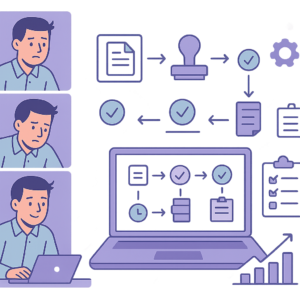
How to Automate Purchase Order Approval Workflows for UK SMEs: Cut Delays & Boost Compliance
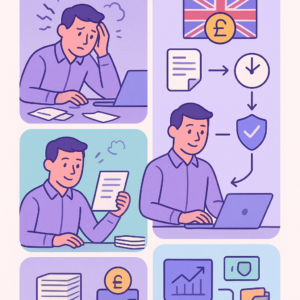
How to Automate Vendor Invoice Processing for UK SMEs: Speed Up Payments & Reduce Errors

How to Automate Invoice Payment Chasing for UK Small Businesses: A Proven 5-Step Guide
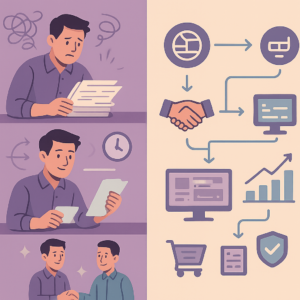
How to Automate Supplier Onboarding for UK SMEs: Streamline Procurement & Ensure Compliance

How to Automate Inventory Management for UK SMEs: Reduce Stock Errors & Boost Efficiency
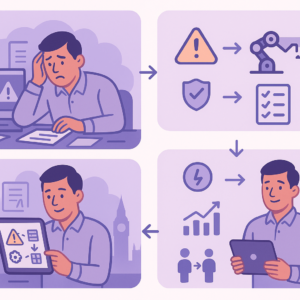
How to Automate Risk Assessment Workflows for UK SMEs: A Compliance Guide
How to Automate GDPR Data Retention Policies for UK SMEs: Delete Personal Data Lawfully
- Should I Use AI to Build My Website? Pros, Cons & Costs
- How to Automate Client Onboarding for UK SMEs: A Practical Guide

- How to Automate Insurance Claim Processing for UK SMEs: Streamline Approvals & Reduce Admin
- How to Automate Subscription Billing for UK SMEs: Reduce Churn & Streamline Recurring Payments
- How to Automate Health and Safety Incident Reporting for UK SMEs: Streamline Compliance & Reduce Liability