How to Automate Client Onboarding for UK SMEs: A Practical Guide
Is manual client onboarding consuming weeks of your team’s time and risking GDPR compliance fines in your UK SME?
Why Automate Client Onboarding in UK SMEs?
Client onboarding automation for UK SMEs revolutionises the process by streamlining admin tasks, reducing errors, and ensuring regulatory compliance from day one.
Traditional manual methods lead to delays, frustrated new clients, and scalability bottlenecks that hinder business growth.
This practical guide provides step-by-step insights into implementing effective automation tailored for UK small and medium enterprises.
Challenges of Manual Client Onboarding for UK SMEs
Manual client onboarding in UK SMEs often involves a labyrinth of spreadsheets, emails, and paper forms that bog down your team and frustrate new clients. What starts as a simple new client sign-up can stretch into weeks due to back-and-forth communications and repetitive data entry.
Common issues include prolonged timelines where clients wait days for approvals or document reviews, leading to cash flow delays as payments are held up. Human errors, such as incorrect data transcription or missed follow-ups, result in compliance gaps and unhappy customers.
Poor visibility across teams means sales, operations, and finance are siloed, causing duplicated efforts and missed opportunities. For a growing UK SME, these inefficiencies not only drain resources but also erode client trust and stunt scalability.
- Prolonged onboarding timelines delaying revenue recognition.
- Repetitive data entry leading to errors and rework.
- Lack of centralised tracking causing miscommunications.
- Increased admin burden diverting focus from core business activities.
Ignoring manual onboarding bottlenecks can lead to client churn rates exceeding 20% and compliance fines up to 4% of global turnover under GDPR.
Key Steps in the Client Onboarding Workflow
Understanding the typical client onboarding workflow is crucial for pinpointing where automation can make the biggest impact. For UK SMEs, this process generally spans from initial client acceptance to full service activation.
It begins with lead qualification and contract agreement, followed by collecting essential documentation like ID verification and consent forms. Subsequent steps involve data verification, internal team assignments, and finally, go-live with access to services or products.
Each stage presents touchpoints ideal for automation, such as automated email sequences for document requests, e-signature integrations for contracts, and workflow triggers for approvals.
- 1. Lead qualification and contract signing.
- 2. Collect and verify client documents (e.g., KYC, GDPR consents).
- 3. Internal approvals and team notifications.
- 4. Set up accounts and integrations (CRM, billing).
- 5. Go-live confirmation and welcome sequence.
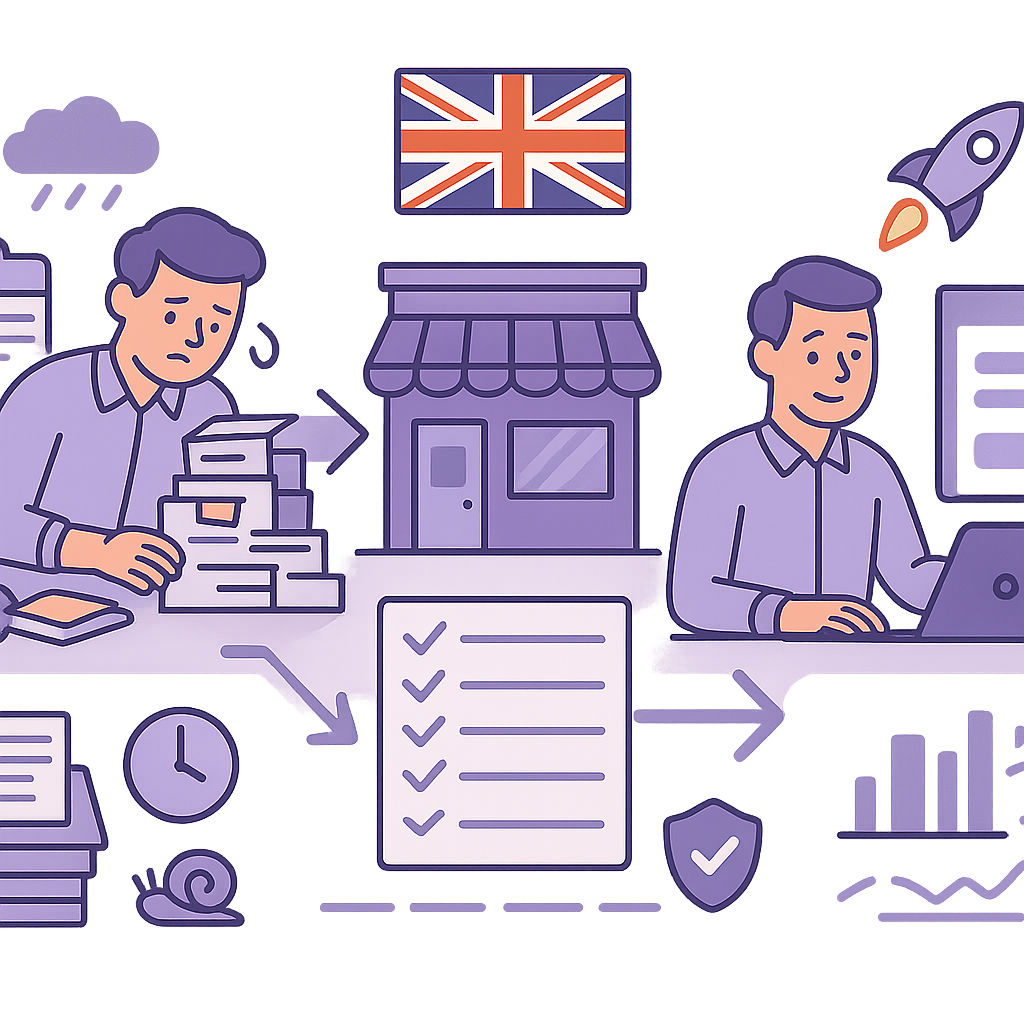
Imagine a flowchart: New Client → Auto-Email Docs Request → E-Sign Contract → Verify Data → Assign Team → Activate Services → Notify Client.
Compliance Risks and How Automation Helps
UK SMEs face stringent regulations like GDPR when handling client data during onboarding. Manual processes heighten risks of data breaches, inadequate consent records, and failure to provide audit trails, potentially leading to fines up to £17.5 million or 4% of annual turnover.
Automation mitigates these by enforcing data encryption, automated consent logging, and immutable audit trails. Tools can flag incomplete compliance checks and ensure all actions are timestamped and logged automatically.
By embedding compliance into workflows, businesses protect their reputation and avoid costly legal issues, allowing focus on growth rather than regulatory worries.
- GDPR: Explicit consent and right to erasure.
- Data minimisation and secure storage requirements.
- Audit-ready records for ICO investigations.
- Right to access and portability compliance.
Manual consent forms often get lost or unsigned, exposing UK SMEs to ICO enforcement actions and reputational damage.
Benefits of Client Onboarding Automation
Client onboarding automation for UK SMEs delivers tangible benefits, starting with dramatic time savings—reducing processes from weeks to days. This accelerates revenue recognition and improves cash flow predictability.
Accuracy soars as automated data validation eliminates errors, while consistent client experiences build loyalty. Scalability becomes effortless, handling increased volumes without proportional staff hires.
Industry benchmarks show UK businesses achieving 50-70% faster onboarding and up to 30% cost reductions, providing a competitive edge in crowded markets.
- Cut onboarding time by up to 70%.
- Reduce errors and admin costs significantly.
- Enhance client satisfaction with seamless processes.
- Enable scalability for business growth.
- Improve compliance and risk management.
Selecting the Best UK SME Onboarding Tools and Integrations
Choosing the right tools for client onboarding automation is key for UK SMEs. Prioritise platforms with GDPR compliance certifications, seamless integrations with existing CRMs, and user-friendly no-code interfaces.
Popular options include Zapier and Make.com for workflow automation, paired with CRMs like HubSpot (free tier available) or Pipedrive for deal tracking. Consider e-signature tools like DocuSign or Adobe Sign for legal validity in the UK.
Evaluate based on cost (starting from £0-£50/month), scalability, support quality, and UK data centre hosting to ensure sovereignty.
- GDPR and UK data protection compliance.
- Ease of use and no-code setup.
- Integrations with CRM, email, and accounting tools.
- Affordable pricing for SMEs.
- Reliable UK-based support.
HubSpot: Free CRM + automations | Zapier: 100s of integrations | Pipedrive: Sales-focused | Make.com: Advanced workflows. Score on compliance, cost, ease.
Step-by-Step: Client Onboarding Automation for UK SMEs
Implementing client onboarding automation starts with mapping your current workflow to identify bottlenecks. Document every step, stakeholder, and pain point to create a clear blueprint.
Next, select and set up tools: integrate your CRM with automation platforms, configure triggers for new deals, and build sequences for docs and approvals. Test thoroughly with dummy clients to iron out issues.
Launch with staff training, monitor performance via dashboards, and iterate based on feedback. Common hurdles like integration glitches can be overcome with phased rollouts.
A client onboarding checklist ensures nothing is missed, promoting smooth adoption across your UK SME.
- Map your existing process.
- Choose and integrate tools.
- Build automated workflows.
- Test end-to-end.
- Train team and launch.
- Monitor and optimise.
✅ Gather client docs automatically.
✅ Verify compliance consents.
✅ E-sign contracts.
✅ Notify and assign teams.
✅ Activate services.
✅ Send welcome pack.
Ready to Transform Your Client Onboarding?
Client onboarding automation for UK SMEs is a game-changer, slashing admin time, bolstering compliance, and scaling your operations effortlessly. By addressing manual inefficiencies head-on, you position your business for sustainable growth.
Follow the steps outlined to implement a robust system tailored to your needs. Regular reviews will keep processes optimised amid evolving regulations and business demands.
Consider partnering with automation experts to customise solutions and avoid common pitfalls, ensuring your onboarding becomes a competitive strength.
Key points
- Manual client onboarding creates inefficiencies, delays, and compliance risks for UK SMEs.
- Client onboarding automation for UK SMEs cuts process times dramatically while embedding GDPR safeguards.
- Map your workflow first, then select compliant tools like integrated CRMs for quick wins.
- Follow a step-by-step implementation to avoid pitfalls and achieve scalability.
- Regular optimisation ensures long-term efficiency and client satisfaction.
- Start automating today to free up resources for business growth.
Frequently asked questions
Is client onboarding automation suitable for small UK businesses?
Yes, client onboarding automation is highly suitable for UK SMEs of all sizes, including small businesses with limited resources. No-code platforms like Zapier or HubSpot allow quick setup without needing dedicated IT staff, and the benefits in time savings and compliance scale with your operations. The key is starting with your core processes to avoid overcomplication.
How long does it take to set up client onboarding automation?
The setup time for client onboarding automation varies depending on your current systems, process complexity, and data quality, typically ranging from a few days for simple workflows to several weeks for comprehensive integrations. Testing and team training are essential steps that influence the timeline, but phased implementation helps UK SMEs go live progressively.
Will automation integrate with my existing CRM and tools?
Most client onboarding automation tools are designed to integrate seamlessly with popular CRMs like HubSpot, Pipedrive, or Salesforce used by UK SMEs, as well as email platforms and accounting software. Check compatibility during free trials, and platforms like Zapier or Make.com support hundreds of apps, making it adaptable to your tech stack.
How does automation help with GDPR compliance in client onboarding?
Automation embeds GDPR compliance by automatically logging consents, timestamping data access, enforcing data minimisation, and creating audit trails for ICO scrutiny. This reduces manual errors that could lead to breaches, ensuring UK SMEs meet requirements for explicit consent and rights like erasure, while flagging issues in real-time.
What happens if an automation workflow breaks?
Reliable automation platforms include monitoring dashboards, error notifications, and fallback options to alert your team if a workflow fails, such as during integrations or data issues. Regular testing and backups prevent disruptions, and UK SMEs should have contingency plans like manual overrides to maintain client service continuity.
Ready to Streamline Your Client Onboarding?
Get expert guidance from Business Automations UK to assess your current processes and implement tailored automation solutions. Avoid common pitfalls and ensure compliance with a no-obligation review.
This article is for general information only. It is not legal, financial, or compliance advice. If you are unsure about GDPR, HMRC, or regulatory obligations, speak to a qualified professional or reach out to us for more information.
Related Posts
Should I Use AI to Build My Website? Pros, Cons & Costs

How to Automate Client Onboarding for UK SMEs: A Practical Guide
How to Automate Insurance Claim Processing for UK SMEs: Streamline Approvals & Reduce Admin

How to Automate Subscription Billing for UK SMEs: Reduce Churn & Streamline Recurring Payments
How to Automate Health and Safety Incident Reporting for UK SMEs: Streamline Compliance & Reduce Liability
How to Automate Purchase Order Approval Workflows for UK SMEs: Cut Delays & Boost Compliance
How to Automate Vendor Invoice Processing for UK SMEs: Speed Up Payments & Reduce Errors
How to Automate Invoice Payment Chasing for UK Small Businesses: A Proven 5-Step Guide
How to Automate Supplier Onboarding for UK SMEs: Streamline Procurement & Ensure Compliance

How to Automate Inventory Management for UK SMEs: Reduce Stock Errors & Boost Efficiency
How to Automate Risk Assessment Workflows for UK SMEs: A Compliance Guide
How to Automate GDPR Data Retention Policies for UK SMEs: Delete Personal Data Lawfully
- Should I Use AI to Build My Website? Pros, Cons & Costs
- How to Automate Client Onboarding for UK SMEs: A Practical Guide

- How to Automate Insurance Claim Processing for UK SMEs: Streamline Approvals & Reduce Admin
- How to Automate Subscription Billing for UK SMEs: Reduce Churn & Streamline Recurring Payments
- How to Automate Health and Safety Incident Reporting for UK SMEs: Streamline Compliance & Reduce Liability