How to Automate Subscription Billing for UK SMEs: Reduce Churn & Streamline Recurring Payments
Are endless manual invoicing tasks and rising customer churn draining time and revenue from your UK SME subscription business?
Understanding Subscription Billing Challenges for UK SMEs
Subscription billing automation UK SMEs is increasingly essential for handling recurring payments efficiently without the pitfalls of manual processes.
Many UK small and medium enterprises still rely on spreadsheets and emails for subscriptions, leading to errors, delayed payments, and frustrated customers who churn.
This guide explores the problems, solutions, and practical steps to automate your subscription billing, helping you save time, reduce risks, and retain more customers.
Common Pain Points of Manual Subscription Billing
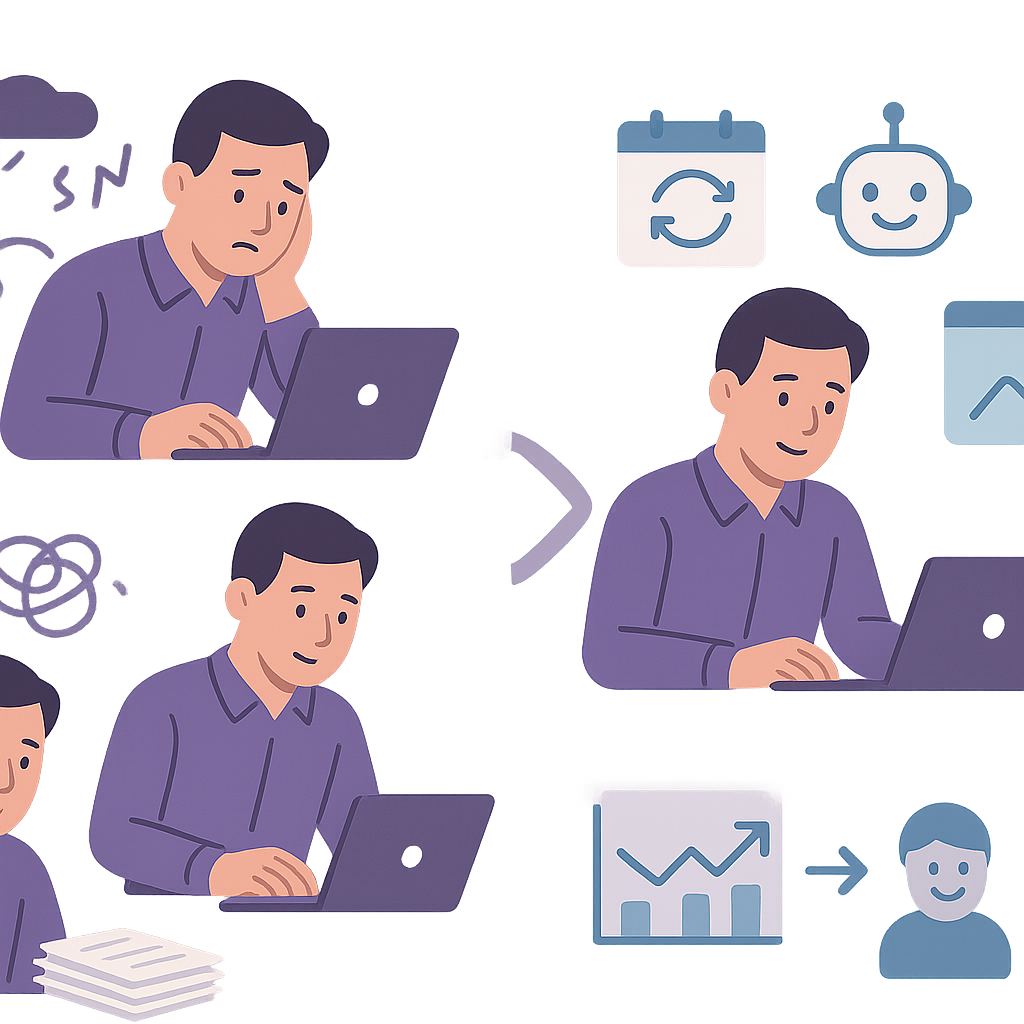
Manual subscription billing is a nightmare for many UK SMEs. Owners and finance teams spend hours each week generating invoices, chasing payments, and reconciling accounts using spreadsheets or basic accounting software that isn’t designed for recurring revenue models.

These processes are prone to human error, such as incorrect pricing calculations, missed renewal dates, or duplicated charges. For a typical subscription-based service like a SaaS tool or membership club, this can mean late payments piling up and staff time diverted from sales or customer service.
The administrative burden only grows as your customer base expands. Tracking failed payments becomes chaotic without automated reminders, leading to cash flow dips and strained relationships with subscribers who feel neglected.
- Time-consuming invoice creation and sending, often taking 10-20 hours per month for mid-sized teams.
- Frequent errors in billing cycles, amounts, or customer details, resulting in disputes and refunds.
- Difficulty tracking subscription statuses, renewals, and cancellations across scattered records.
- Overwhelmed staff unable to focus on growth activities like marketing or product development.

Manual processes heighten the risk of data handling errors that could breach UK data protection laws, leading to fines or reputational damage.
How Poor Billing Drives Customer Churn
Poor billing practices are a silent killer for subscription businesses. Customers expect seamless, predictable payments, and when that’s not delivered, trust erodes quickly leading to cancellations.
Billing delays from manual scheduling mean subscribers might not receive invoices on time, prompting them to question the service’s reliability. Incorrect charges, such as unexpected price hikes without notice, breed resentment and prompt immediate churn.
Failed payment handling exacerbates this; without automated retries or polite reminders, customers face awkward declined card issues, associating the hassle with your brand rather than their bank.
- Delayed or missed invoices leading to payment lapses and forgotten renewals.
- Surprise charges or billing errors causing customer frustration and disputes.
- Lack of transparent communication about plan changes or usage-based fees.
- No proactive dunning (payment recovery) processes, resulting in unnecessary losses.
Benefits of Subscription Billing Automation for UK SMEs
Subscription billing automation transforms chaotic manual processes into efficient, reliable systems tailored for UK SMEs. It handles recurring invoices automatically, ensuring they’re generated, sent, and tracked without human intervention.
Intelligent features like payment retries and churn alerts keep revenue flowing and customers happy. Businesses see improved cash flow predictability, as payments are collected on schedule, reducing the feast-or-famine cycles common in manual setups.
Staff are freed from drudgery, allowing focus on high-value tasks like customer engagement and business expansion. Scalability becomes effortless, supporting growth without proportional admin increases.
- Automated invoice generation and multi-channel delivery (email, portal).
- Smart dunning sequences for recovering failed payments.
- Real-time dashboards for monitoring revenue, churn rates, and ARPU.
- Seamless scaling to handle thousands of subscribers without added headcount.
- Enhanced customer experience through self-service portals and instant updates.
Essential Features in Subscription Billing Tools
Choosing the right subscription billing tool means looking beyond basic invoicing to features that support UK SME realities, such as VAT handling and multi-currency if expanding.
Core capabilities include customisable billing cycles (monthly, annual, usage-based), integrated payment gateways popular in the UK like Stripe or GoCardless, and robust analytics for churn prediction.
Integrations with CRM systems (e.g., HubSpot, Salesforce) and accounting software (e.g., Xero, QuickBooks) ensure data flows smoothly, eliminating silos.
- Flexible recurring billing schedules and proration for mid-cycle changes.
- Built-in dunning management with email/SMS sequences.
- GDPR-compliant data handling and consent management.
- API access for custom integrations and webhooks for real-time updates.
- Comprehensive reporting on MRR, churn, and lifetime value.

– Supports UK payment methods (Direct Debit, cards)
– VAT automation
– Mobile-friendly customer portal
– Free trial or SME pricing tiers
Step-by-Step Guide to Setting Up Subscription Billing Automation
Setting up subscription billing automation doesn’t have to be overwhelming. Start by selecting a tool that integrates with your existing stack, then migrate data carefully to avoid disruptions.
Test thoroughly in a sandbox environment before going live, and communicate changes to customers to maintain trust. UK SMEs can leverage tools with built-in VAT compliance for smoother rollout.
Ongoing monitoring ensures the system performs as expected, with tweaks based on performance data.
- 1. Assess current processes and choose a compatible tool (e.g., Chargebee, Recurly).
- 2. Export customer and subscription data from spreadsheets/CRM.
- 3. Map data fields and import, validating accuracy.
- 4. Configure billing rules, payment methods, and dunning workflows.
- 5. Test end-to-end: invoice generation, payments, failures.
- 6. Launch with a phased rollout (e.g., new subscribers first).
- 7. Train team and monitor metrics for 30 days.
Always back up data before migration and test imports on a subset to prevent customer-facing errors.
Ensuring GDPR Compliance in Automated Subscription Billing
GDPR compliance is non-negotiable for UK SMEs automating subscription billing, especially with customer payment data involved. Choose tools with UK server options and robust security certifications.
Key practices include obtaining explicit consent for data processing, providing easy opt-out options, and automating data retention policies to delete records after subscription ends.
Audit logs and data portability features help demonstrate compliance during ICO checks, building customer confidence.
- Secure data encryption in transit and at rest.
- Automated consent tracking and renewal prompts.
- Right to erasure workflows for cancelled subscribers.
- Regular security audits and penetration testing by the provider.
– Document lawful basis for processing (e.g., contract).
– Offer data export/download on request.
– Use UK/EU data centres where possible.
– Appoint a DPO if handling large volumes.
Ready to Transform Your Subscription Management?
Automating subscription billing is a game-changer for UK SMEs battling manual inefficiencies and churn. By addressing pain points with smart tools, you can streamline recurring payments, boost retention, and focus on growth.
Implement the steps outlined, prioritise GDPR compliance, and select features that fit your scale. The result is predictable revenue and happier customers without the admin overload.
Consider consulting automation experts to tailor a solution for your business, ensuring a smooth transition to efficient operations.
Key points
- Subscription billing automation UK SMEs addresses manual errors and time sinks in recurring payments.
- Poor billing is a leading cause of customer churn; automation with retries and reminders helps retain subscribers.
- Prioritise tools with GDPR compliance, integrations, and churn analytics for long-term success.
- Follow a step-by-step setup to implement quickly with minimal disruption.
- Monitor payment success rates and churn metrics post-automation to refine workflows.
- Essential features like dunning and reporting ensure scalability and compliance.
Frequently asked questions
Is subscription billing automation suitable for small UK businesses?
Yes, subscription billing automation is well-suited for UK SMEs of various sizes, including small businesses with modest subscriber bases. Many platforms offer flexible pricing tiers and simple setups that scale as your operations grow, integrating seamlessly with common tools like Xero or QuickBooks. The key is selecting a solution that matches your current volume and future plans, considering factors such as data migration effort and team familiarity.
How does subscription billing automation help reduce customer churn?
Automation reduces churn by enabling timely invoice delivery, automated payment retries, and personalised dunning communications that recover failed payments without frustrating customers. Features like churn prediction analytics and self-service portals enhance transparency and reliability, fostering trust. However, effectiveness depends on your customer data quality, workflow customisation, and integration with CRM systems to trigger proactive retention measures.
What GDPR compliance considerations are important for automated subscription billing?
GDPR compliance in automated billing requires tools with data encryption, consent management, and right-to-erasure features, alongside UK/EU data hosting where possible. Ensure explicit consent for recurring payments, easy opt-outs, and audit logs for data processing. Compliance varies with your data handling practices, so regular reviews and provider certifications are essential to mitigate risks under UK data protection laws.
How long does it take to set up subscription billing automation?
Setup time for subscription billing automation typically ranges from a few days to several weeks, depending on the complexity of your current processes, data volume, and integrations required. Simpler migrations for small UK SMEs might take under a week with testing, while larger setups involving custom workflows could extend longer. Thorough testing and phased rollouts help ensure a smooth transition without disrupting operations.
Can subscription billing automation integrate with existing UK SME tools like Xero or Stripe?
Most subscription billing platforms offer native integrations with popular UK tools such as Xero, QuickBooks, Stripe, and GoCardless, allowing seamless data sync for invoices, payments, and customer records. Compatibility depends on the specific tools and APIs used, so checking the provider’s integration directory and testing connections is advisable before committing.
Ready to Streamline Your Subscription Billing?
Get personalised guidance from Business Automations UK on implementing subscription billing automation tailored to your SME. We’ll review your current setup and suggest compliant, efficient workflows.
This article is for general information only. It is not legal, financial, or compliance advice. If you are unsure about GDPR, HMRC, or regulatory obligations, speak to a qualified professional or reach out to us for more information.
Related Posts

How to Automate Client Onboarding for UK SMEs: A Practical Guide

How to Automate Insurance Claim Processing for UK SMEs: Streamline Approvals & Reduce Admin

How to Automate Subscription Billing for UK SMEs: Reduce Churn & Streamline Recurring Payments
How to Automate Health and Safety Incident Reporting for UK SMEs: Streamline Compliance & Reduce Liability
How to Automate Purchase Order Approval Workflows for UK SMEs: Cut Delays & Boost Compliance
How to Automate Vendor Invoice Processing for UK SMEs: Speed Up Payments & Reduce Errors
How to Automate Invoice Payment Chasing for UK Small Businesses: A Proven 5-Step Guide
How to Automate Supplier Onboarding for UK SMEs: Streamline Procurement & Ensure Compliance

How to Automate Inventory Management for UK SMEs: Reduce Stock Errors & Boost Efficiency
How to Automate Risk Assessment Workflows for UK SMEs: A Compliance Guide
How to Automate GDPR Data Retention Policies for UK SMEs: Delete Personal Data Lawfully
How to Automate Compliance Training Tracking for UK SMEs: A Step-by-Step Guide
- How to Automate Client Onboarding for UK SMEs: A Practical Guide

- How to Automate Insurance Claim Processing for UK SMEs: Streamline Approvals & Reduce Admin
- How to Automate Subscription Billing for UK SMEs: Reduce Churn & Streamline Recurring Payments
- How to Automate Health and Safety Incident Reporting for UK SMEs: Streamline Compliance & Reduce Liability
- How to Automate Purchase Order Approval Workflows for UK SMEs: Cut Delays & Boost Compliance