Why UK SMEs Need Health and Safety Incident Reporting Automation
UK SMEs lose countless hours on manual health and safety incident reporting, risking hefty HSE fines and legal liabilities – automation offers a smarter way to stay compliant and efficient.
Why UK SMEs Need Health and Safety Incident Reporting Automation
Health and safety incident reporting automation UK SMEs is crucial for meeting HSE and RIDDOR obligations while slashing administrative time and errors.
Manual processes create delays in reporting near-misses, accidents, and incidents, heightening risks for businesses in trades, services, and professional sectors.
This guide outlines practical steps to automate workflows, ensure GDPR-safe data handling, and transform safety management into a streamlined strength.
The Challenges of Manual Health and Safety Incident Reporting
Manual health and safety incident reporting remains a significant burden for many UK SMEs, particularly in fast-paced sectors like trades, services, and ecommerce. Workers on site or in warehouses often rely on paper forms or basic spreadsheets to log near-misses, minor injuries, or accidents. These documents then need to be physically transported or emailed to office staff, leading to inevitable delays and potential loss of critical details.
The process is notoriously time-intensive. A tradesperson might spend 20-30 minutes completing a form after an incident, only for it to sit on a manager’s desk for days awaiting review. Data entry into central systems introduces errors – illegible handwriting, missing fields, or inconsistent categorisation – which can render records useless during HSE inspections.
As businesses grow, these issues compound. With more staff and sites, manual tracking becomes chaotic, overwhelming administrative teams and diverting focus from revenue-generating activities. Notifications to relevant parties, such as safety officers or directors, are often ad-hoc via phone or email, risking oversights that could prevent future incidents.
- Time wasted on repetitive paperwork and data entry.
- High risk of human errors in transcription and classification.
- Delayed notifications prevent timely investigations and corrective actions.
- Scalability problems as team size and incident volume increase.
- Difficulty in analysing trends for proactive safety improvements.
HSE and RIDDOR Reporting Requirements for UK SMEs
UK SMEs must comply with the Health and Safety Executive (HSE) guidelines and the Reporting of Injuries, Diseases and Dangerous Occurrences Regulations (RIDDOR) 2013. RIDDOR mandates reporting specific incidents to the HSE within strict timelines to ensure oversight and prevention of workplace hazards.
Reportable incidents include fatalities (immediately by phone, followed by online report), major injuries (e.g., fractures, amputations, loss of consciousness), over-seven-day incapacitations, specified diseases (e.g., occupational dermatitis), and dangerous occurrences (e.g., collapse of scaffolding). SMEs with fewer than 10 employees have some exemptions from record-keeping certain minor incidents, but all must report RIDDOR events accurately.
Records must be kept for at least three years (five for over-seven-day injuries), and businesses should maintain detailed logs for insurance claims, internal audits, and potential HSE visits. Accurate, timely reporting demonstrates due diligence and can mitigate liability during investigations.
GDPR compliance is equally vital when handling personal data in incident reports, such as employee details or witness statements, requiring secure storage and limited access.

– Fatalities and major injuries: Report immediately.
– Over-7-day incapacitation: Within 15 days (report), record for 5 years.
– Dangerous occurrences: Within 10 days.
– Occupational diseases: When diagnosed.
Risks of Inadequate Incident Reporting and Non-Compliance
Failing to implement proper health and safety incident reporting can expose UK SMEs to severe financial penalties from the HSE. Fines for non-compliance have reached over £20,000 for smaller businesses in recent cases, with unlimited fines possible in Crown Court for serious breaches. Enforcement notices can halt operations until rectified, causing revenue loss.
Legal repercussions extend to prosecutions, where directors may face personal liability. Poor records also weaken insurance claims, leading to denied payouts or higher premiums. Reputational damage from public HSE listings or negative reviews can deter customers, especially in service-oriented SMEs.
Data mishandling in manual logs risks GDPR violations, with fines up to 4% of global turnover. Real-world examples include a construction SME fined £15,000 for delayed RIDDOR reporting after a machinery incident, and a service firm penalised for inadequate near-miss tracking that allowed recurring accidents.
- HSE fines starting at £1,000+ escalating to £20,000+ for SMEs.
- Operational shutdowns via improvement or prohibition notices.
- Increased insurance costs or claim rejections.
- GDPR penalties for insecure personal data handling.
- Long-term reputational harm affecting client trust.

HSE fines for SMEs often exceed £20,000, with potential for prosecution and business closure notices. Always prioritise timely, accurate reporting to avoid escalation.
Benefits of Health and Safety Incident Reporting Automation UK SMEs
Health and safety incident reporting automation UK SMEs delivers immediate efficiency gains by replacing manual processes with digital workflows. Staff can submit reports via mobile apps in minutes, with data automatically populating central dashboards – cutting admin time by up to 80%.
Instant notifications ensure managers and safety leads receive alerts within seconds, enabling swift investigations and corrective actions. Centralised, GDPR-compliant logs provide audit-ready records, simplifying HSE compliance and insurance audits.
Beyond compliance, automation unlocks insights through trend analysis, helping identify recurring hazards like slippery floors in retail or equipment failures in trades. This proactive approach reduces incident rates, lowers liability, and supports scalable safety management as your SME grows.
Compared to manual methods, automated systems offer searchable archives, custom reports, and integration with tools like Microsoft Teams or HR software, transforming a compliance chore into a strategic advantage.
- Drastic reduction in reporting time: minutes vs hours.
- Real-time notifications for faster response.
- Secure, centralised logs compliant with HSE and GDPR.
- Trend analytics for preventing future incidents.
- Audit-proof records reducing legal and insurance risks.
Key Components of an Automated Incident Reporting Workflow
An effective automated incident reporting workflow for UK SMEs centres on user-friendly, mobile-accessible forms that capture all necessary details at the point of incident. Custom fields can include RIDDOR classifications, photos, witness contacts, and location data, ensuring comprehensive records without excess admin.
Once submitted, reports automatically route to designated approvers via email, SMS, or app notifications. Workflows trigger follow-up tasks, such as scheduling investigations or adding calendar reminders, while data flows securely to cloud storage compliant with UK data protection standards.
Integration capabilities link with existing systems – calendars for review deadlines, HR tools for employee data, or accounting for cost tracking. Dashboards provide at-a-glance overviews, with filters for trends and exportable reports for HSE submissions.
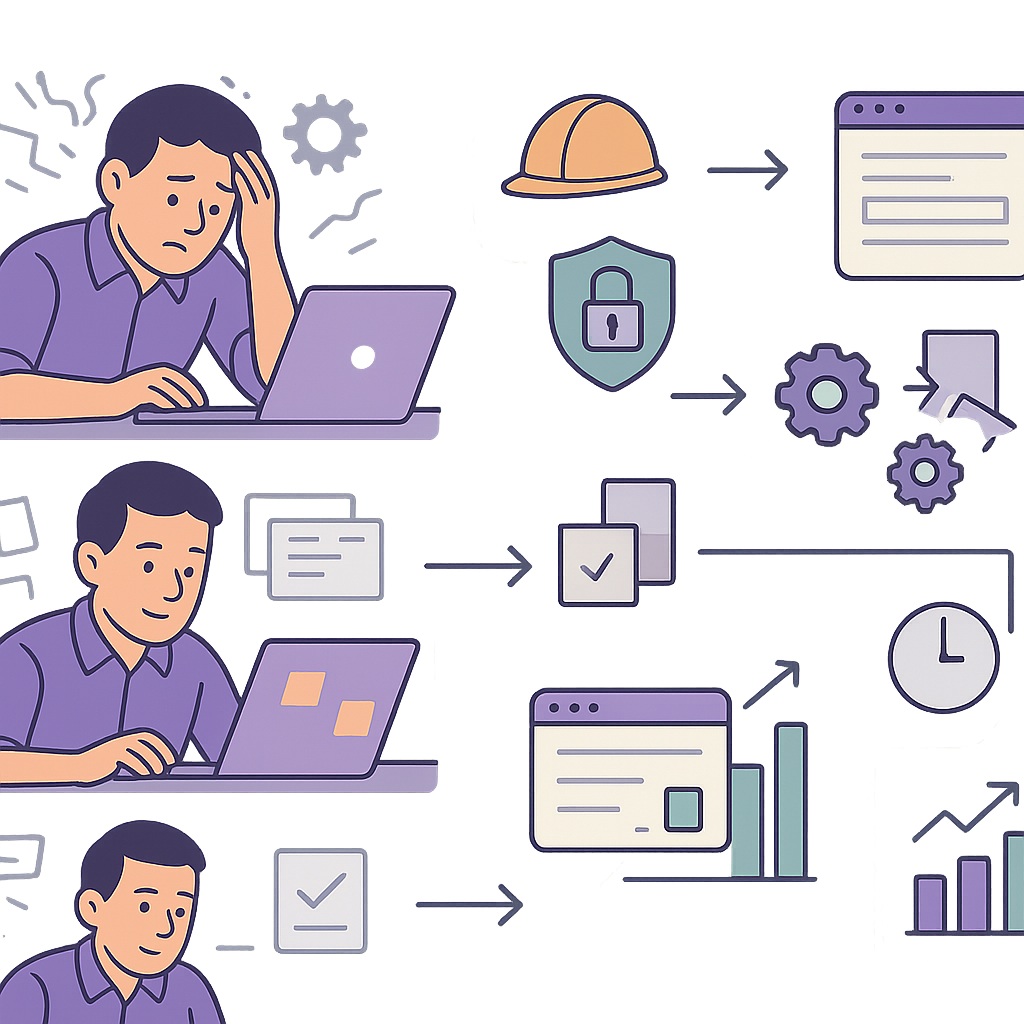
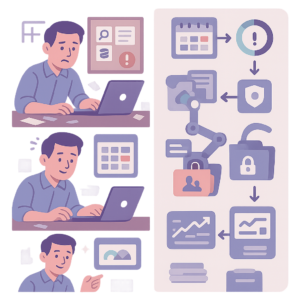
Visual workflow: Employee submits form → Auto-classify & notify manager → Schedule follow-up → Archive in secure log → Generate insights.
- Mobile-first reporting forms with photo upload.
- Automated routing and multi-level approvals.
- Real-time notifications (email/SMS/app).
- GDPR-secure cloud storage and access controls.
- Analytics dashboards for trend spotting and reporting.
Step-by-Step Guide to Implementing Health and Safety Incident Reporting Automation
Implementing health and safety incident reporting automation doesn’t require a complete IT overhaul. Start by mapping your current process to identify bottlenecks, then select no-code platforms like Zapier, Airtable, or specialist safety apps tailored for UK SMEs.
Design intuitive forms mirroring your needs, test workflows end-to-end, and roll out with minimal training. Monitor performance and iterate for continuous improvement, ensuring scalability as your business expands.
Budget-friendly options exist for SMEs, often starting under £50/month, with free trials to validate fit before committing.
- Assess your current incident reporting process and pain points.
- Choose a no-code automation tool suitable for SMEs (e.g., with mobile support).
- Design custom forms including RIDDOR fields, photos, and classifications.
- Configure automated notifications and approvals.
- Integrate with calendars, email, or HR systems.
- Test the full workflow with sample incidents.
- Train staff via short demos and provide quick-reference guides.
- Launch, monitor usage, and review metrics monthly for refinements.
Secure Compliance and Efficiency with Automated Incident Reporting
Health and safety incident reporting automation UK SMEs is a straightforward path to HSE and RIDDOR compliance, minimising risks while freeing up valuable time. By addressing manual inefficiencies, businesses can achieve reliable, scalable safety management that supports growth.
Automation not only ensures timely reporting and secure data handling but also fosters a culture of proactive risk prevention through data-driven insights. UK SMEs ignoring this opportunity risk falling behind in an increasingly regulated environment.
Consider reviewing your current processes and exploring user-friendly tools to implement these workflows – consulting a specialist can accelerate setup and tailor solutions to your operations.
Key points
- Manual health and safety incident reporting burdens UK SMEs with time loss and error risks.
- Health and safety incident reporting automation UK SMEs ensures HSE/RIDDOR compliance, GDPR-safe logs, and rapid response times.
- Automation reduces liability, enables data insights, and scales with business growth.
- Start by mapping your current process and selecting user-friendly tools.
- Implement step-by-step for quick wins in safety management.
Frequently asked questions
Is health and safety incident reporting automation suitable for small UK businesses?
Yes, automation is highly suitable for UK SMEs, including those with limited staff or multiple sites, as it eliminates manual paperwork and scales effortlessly with growth. The ease of implementation depends on factors such as your current processes, data volume, and chosen tools, making it accessible without needing dedicated IT support.
How does automation ensure compliance with HSE and RIDDOR requirements?
Automated systems structure reports to capture all RIDDOR-required details, trigger timely notifications, and maintain records for the mandated periods like three or five years. This helps SMEs demonstrate due diligence during inspections, though the exact configuration relies on aligning workflows with your specific reporting obligations.
What GDPR risks are involved with automated incident reporting, and how to mitigate them?
Handling personal data in incident logs requires UK GDPR compliance, including secure storage, access controls, and data minimisation. Select platforms with built-in encryption and audit trails, and conduct regular reviews to ensure only necessary information is collected and retained appropriately.
Can incident reporting automation integrate with our existing business tools?
Most automation platforms offer integrations with common SME tools like Microsoft Teams, Google Workspace, or HR software through no-code connectors. Compatibility depends on your specific systems and setup, so testing during a trial phase is recommended to confirm seamless operation.
What happens if the automation system fails during an incident?
Robust platforms include redundancies like offline mobile reporting that syncs later, plus manual fallback options to ensure reporting continuity. Regular testing, monitoring, and provider support minimise downtime risks, keeping your compliance intact.
Ready to Streamline Your Incident Reporting?
Contact Business Automations UK for a tailored review of your health and safety processes. We’ll help identify automation opportunities that fit your SME operations and compliance needs.
This article is for general information only. It is not legal, financial, or compliance advice. If you are unsure about GDPR, HMRC, or regulatory obligations, speak to a qualified professional or reach out to us for more information.
Related Posts

How to Automate Client Onboarding for UK SMEs: A Practical Guide


How to Automate Insurance Claim Processing for UK SMEs: Streamline Approvals & Reduce Admin

How to Automate Subscription Billing for UK SMEs: Reduce Churn & Streamline Recurring Payments
How to Automate Health and Safety Incident Reporting for UK SMEs: Streamline Compliance & Reduce Liability

How to Automate Purchase Order Approval Workflows for UK SMEs: Cut Delays & Boost Compliance

How to Automate Vendor Invoice Processing for UK SMEs: Speed Up Payments & Reduce Errors

How to Automate Invoice Payment Chasing for UK Small Businesses: A Proven 5-Step Guide

How to Automate Supplier Onboarding for UK SMEs: Streamline Procurement & Ensure Compliance

How to Automate Inventory Management for UK SMEs: Reduce Stock Errors & Boost Efficiency
How to Automate Risk Assessment Workflows for UK SMEs: A Compliance Guide
How to Automate GDPR Data Retention Policies for UK SMEs: Delete Personal Data Lawfully

How to Automate Compliance Training Tracking for UK SMEs: A Step-by-Step Guide
- How to Automate Client Onboarding for UK SMEs: A Practical Guide

- How to Automate Insurance Claim Processing for UK SMEs: Streamline Approvals & Reduce Admin
- How to Automate Subscription Billing for UK SMEs: Reduce Churn & Streamline Recurring Payments
- How to Automate Health and Safety Incident Reporting for UK SMEs: Streamline Compliance & Reduce Liability
- How to Automate Purchase Order Approval Workflows for UK SMEs: Cut Delays & Boost Compliance